Categories
Uncategorized

Week 14: Now a night owl

It is day 100 of my challenge and it has now been a month since my last work shift, and I am currently on furlough. I have just over three weeks left of my four months of nothing new, so we’ll see how many of my goals I can implement.

Goals that I implemented:

  • Tool 1 Stop Shopping goal: no new things except food and gas/try to buy local if new
    • Update: Naught added to the fund.
  • Tool 2 Grow Some Food goal: plant beans in a pot
    • Update: Beany babies will have another batch of beans in a bit.
  • Tool 3 Eat Local goal: start tracking meatless days
    • Update: I did not eat any meat yesterday or today and I will try to be a full vegetarian a couple of days per week and keep track. I have identified as a part-time vegetarian for a few years, which I will explain below.
  • Tool 4 Buy Local goal: buy from local restaurants and no chains/fast food
    • Update: Naught added to the fund.
  • Tool 5 Turn Off The Lights goal: no phone until after breakfast and computer off by 9:30pm
    • Update: My sleep schedule has been pushed way back to falling asleep at 1 or 2am most nights even if I try to go to sleep earlier, so I’m not going to fine myself for staying on the computer later. I continue to be away from my phone when I eat meals.
  • Tool 6 Consume Less Plastic goal: $5 fine for any disposable plastic utensils/straws/plates/cups
    • Update: Naught added to the fund.
  • Tool 10 Track Your Trash goal: research and purchase reusable cloth feminine products
    • Update: I ordered and received two more pads from Etsy. Technically they are new items even if they are an investment, so I’ll go ahead and add $30 to the fund for all of them.
  • Tool 10 Track Your Trash goals: look into composting
    • Update: I’m just starting on this goal and I will also discuss this below.
  • Tool 11 Guzzle Less Gas goal: begin tracking gas/train/bike usage
    • Update: I only drove once to get groceries, and I bike to a local park almost every day.
  • Continued tracking time.
    • Update: I spent quite a bit of time this week watching shows, including live-streamed concerts, webinars, documentaries, and musicals. I am also slowly getting through my to-do list.

Goals that I still need to implement:

  • Tool 3 Eat Local goals: look into IDEAS for Us farmers market
  • Tool 6 Consume Less Plastic goal: only buy products with recyclable packaging for a period of time
  • Tool 10 Track Your Trash goals: look into visiting a landfill, do the waste/water audit I created in college and carry trash
  • Tool 11 Guzzle Less Gas goals: calculate my carbon footprint, ultimately donate to offset fund at the end of the four months, conduct cost-benefit analysis of trading in my RAV4 for a hybrid or electric car
  • Additional goals: find and apply to summer and post-summer jobs, work on my college thesis for publishing
  • Nothing New Fund for the past week: $30; Current total: $194

Of the many things that I watched this past week, two of them were a Fridays For Future webinar and a documentary called The Need to Grow. Both were about food production and how it relates to climate change. My key takeaway from the webinar was that the two things that everyone can do to most reduce their carbon footprint are to stop flying and to shift to a plant-based diet. I had multiple takeaways from The Need to Grow. I like statistics because numbers reveal truth in a way that words do not. I made a list of them from the documentary, and I’ll share just a few. In the United States, more than one third of fossil fuels, half of all water, and 80% of farm land are used by animal agriculture. At the same time, 32 million tons of food are thrown out every year in the United States, and over 97% of our food waste ends up in landfills. We lose soil at ten times the rate at which it can be naturally replenished, and we have an estimated 60 years of farmable soil left.

The documentary shifted my way of thinking from trees as the way to sequester carbon to soil as a major solution for climate change. Stopping deforestation is very important for maintaining our existing carbon sinks, but looking to the future, protecting soil may be more important for not only mitigating climate change, but for creating a food system that is able to sustain humanity. According to the documentary, healthy soil is alive with microbes that evolved to provide plants with the healthiest growing conditions, and it is in combination with the growth of plants that carbon can be sequestered in healthy soil. Our current method of factory farming, which involves applying large amounts of pesticides and fertilizers to a monoculture, is killing the soil in the attempt to circumvent natural processes, as if that is a good idea. Regenerative agriculture, which attempts to replicate what happens in nature, provides a sustainable alternative to factory farming that makes people healthier, gives them local food security, and helps mitigate climate change. What’s not to love?

To avoid contributing to methane emissions by sending food waste to the landfill, composting can return the carbon from organic materials to the Earth and help produce healthy soil. It gives a whole new meaning to the climate strike chant, “No more coal, no more oil, keep our carbon in the soil.” We need to keep prehistoric carbon found in fossils fuels in the ground, but we also need to keep present-day carbon out of our atmosphere by securing it in our soil.

When I was in college, I fed my banana peels to two compost bins that lived next to our campus garden, which was my baby that I loved and tended daily (see if you can find the two bins in the photo on the home page of this blog). I had a mental mind shift in which I no longer saw my food waste as trash, but instead as something that belonged in the compost bin that would eventually become soil that would nourish my vegetables. After I graduated, I spent a year traveling in AmeriCorps NCCC and I lived in seven states over the course of eleven months. Now that I am not moving every month or two, and with what I now know from the documentary about the importance of composting to the reduction of emissions, I’m planning to start composting again. What container I will use and where I will do it is yet to be determined, but I have started to hold on to my food waste.
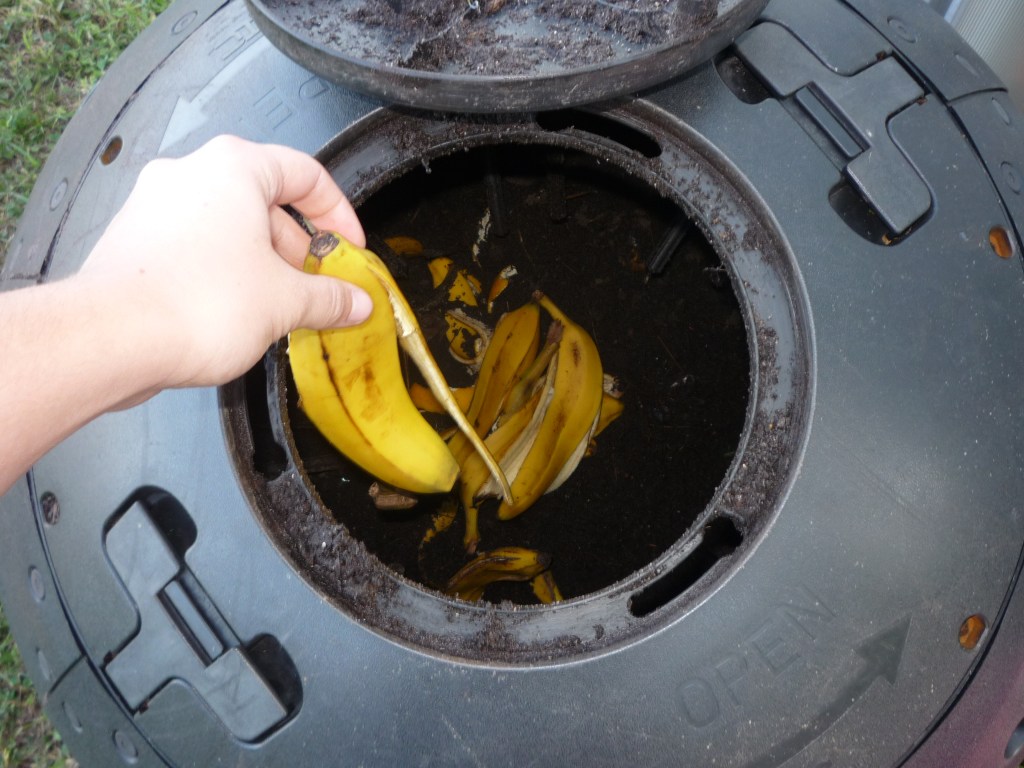
Feeding the compost ball.
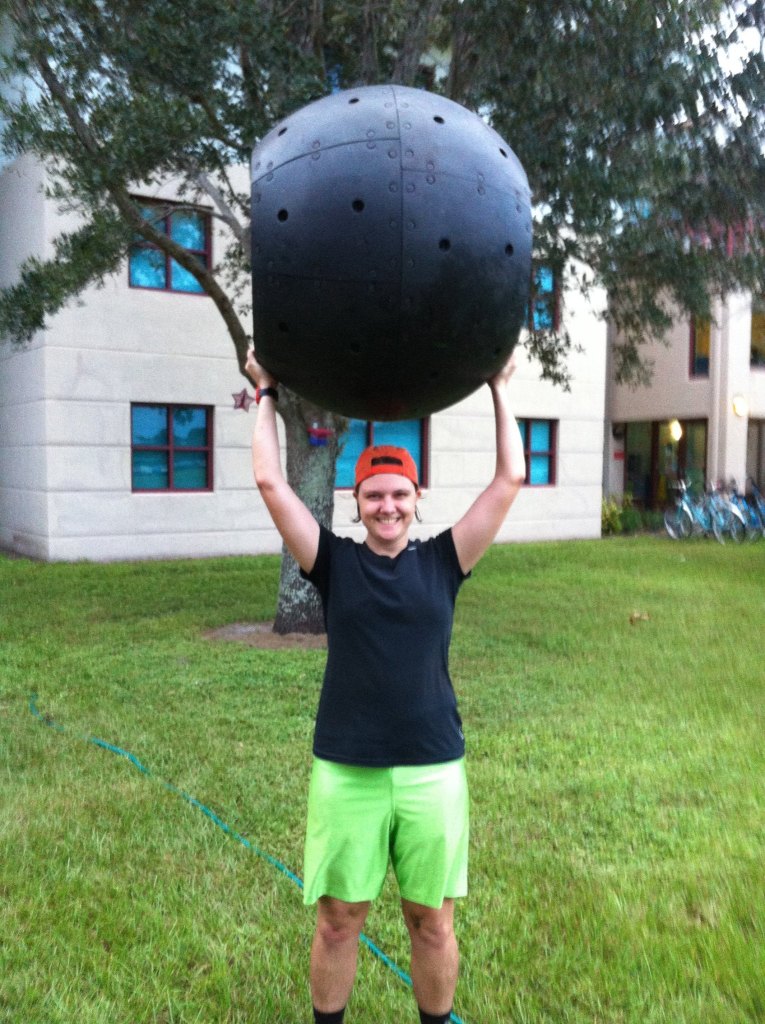
Holding up the compost ball after emptying it.

In addition to composting, another one of my goals that I planned to implement when I started my four months was to track how much meat I eat. A few names that I have called myself to describe my diet over the past few years include pollo-pescatarian and part-time vegetarian. I do not eat beef or pork, but I eat chicken and seafood. I decided that I didn’t want to eat beef relatively early, maybe in eighth or ninth grade, because I did not enjoy the taste and I did not want to continue consuming an animal that I did not have any reason to eat. I am proud to say that I have never eaten a Big Mac or a Whopper. In college, I learned about the high environmental costs of beef, which only added to my list of reasons not to eat it. I also gave up pork after learning about how smart pigs are and how their tails are docked, or partly chopped off, so that they don’t let other pigs bite their tails. I read books like The Omnivore’s Dilemma by Michael Pollen and I watched some documentaries on animal agriculture and factory farming, so I accepted the moral costs of continuing to eat some types of meat by being educated on what my food had to go through to get to me. I ate all of my meals at the campus dining hall in college, and I did my best to eat at least two of my three meals every day without meat, which is how I came to call myself a part-time vegetarian.

Right now, I continue to eat chicken and fish because I enjoy their taste and they have lower environmental impacts than other types of meat. I also eat cheese, but I recently decided to stop deliberately drinking milk or eating eggs unless they are part of a recipe. For the past month, or the duration of time that I have been in quarantine, almost all of my breakfasts and lunches have been vegetarian, and many of my dinners have involved chicken or fish, so about 66% of my diet is currently vegetarian. Now that I will be keeping track of my meatless days, I expect them to increase. I’ll probably be eating more chickpeas and soybeans, which were staples of my diet when I was in college. Eat less meat and compost your food waste and may thee use naught new.
This was my theme song this past week, as I found the lyrics relatable in the context of quarantine. The music video is also aesthetically pleasing.
Categories
Uncategorized

Week 13: Menstrual cycling, bicycling, and recycling

Three months down, one more to go. Of course my nothing new journey of living a low impact life will continue after my four months are up, but it may look different depending on where life takes me next.

Goals that I implemented:

  • Tool 1 Stop Shopping goal: no new things except food and gas/try to buy local if new
    • Update: Naught added to the fund.
  • Tool 2 Grow Some Food goal: plant beans in a pot
    • Update: Beany babies are still producing a few more beans. I may start growing tomatoes next.
  • Tool 4 Buy Local goal: buy from local restaurants and no chains/fast food
    • Update: Naught added to the fund.
  • Tool 5 Turn Off The Lights goal: no phone until after breakfast and computer off by 9:30pm
    • Update: $5 added to the fund for using my computer past 9:30pm and $1 for phone on one morning. At this point, my schedule has changed so that I’m staying up later and sleeping in later, so I guess I’ll be paying for that.
  • Tool 6 Consume Less Plastic goal: $5 fine for any disposable plastic utensils/straws/plates/cups
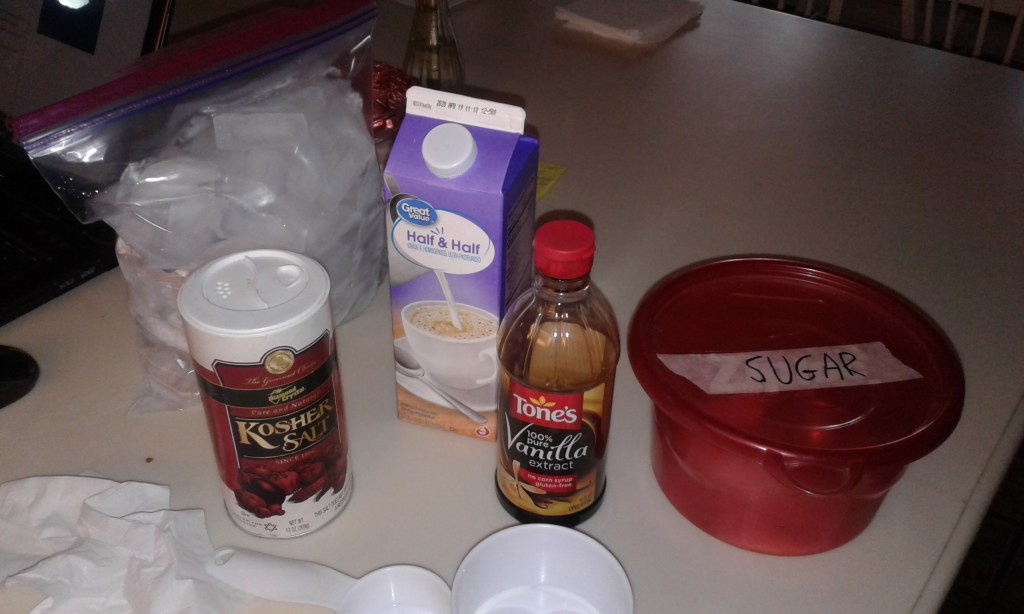
    • Update: $10 added to the fund because I used two Ziploc bags to make homemade ice cream (I will try to reuse them at least).
  • Tool 10 Track Your Trash goal: research and purchase reusable cloth feminine products
    • Update: I bought one pad and two liners to try before buying more. I found that the pad was more comfortable than a disposable pad, and of course it reduces a large source of my disposable waste, so I’ll most likely buy some more reusable pads from the same Etsy store, yurtcraft. Reusable pads may sound gross at first, but you can wash them just like your other clothes and they really are more comfortable, so I encourage you to try them out if you are a fellow menstruater! There are also Diva Cups, which are the reusable equivalent of tampons. Check them out as well.
  • Tool 10 Track Your Trash goals: research recycling in Orlando and Kissimmee
    • Update: See my story below.
  • Tool 11 Guzzle Less Gas goal: begin tracking gas/train/bike usage
    • Update: I did not use my car at all and biked a bit. There is a grassy drainage ditch along a dirt road in a nearby park that I bike through as if it is a half-pipe, and that’s the closest I’ll get to mountain biking in Florida. I got the idea in my head that I would like to return to Norton, Virginia, to go mountain biking on the trails I helped build when I was in AmeriCorps NCCC last year, so maybe a road trip will happen at some point when quarantine ends.
  • Continued tracking time.
    • Update: There are so many free concerts, Shakespeare/musical/theater shows, virtual parties, webinars, and PBS shows on my to-watch list that I can hardly keep up. In addition, for the first time ever, I spent time creating a list of my song parodies in order of when I wrote them. I learned how to write parodies in middle school music class in 2009 and really got into writing them in 2012, and my current count is at 265 (the true count is closer to 260). If you are interested, you can read some of them on my other blog, Parodies for Posterity.  
Ingredients for homemade ice cream: half and half, vanilla extract, sugar, salt, and ice.
Ice cream in a bag tastes better than it looks.

Goals that I still need to implement:

  • Tool 3 Eat Local goals: look into IDEAS for Us farmers market; start tracking meatless day/part-time vegetarian, in addition to already eating mostly plant-based
  • Tool 6 Consume Less Plastic goal: consider a mini-goal of only buying products with recyclable packaging for a certain amount of time
  • Tool 10 Track Your Trash goals: look into composting, look into visiting a landfill, consider doing a waste/water audit and carrying trash, consider not using paper towels for personal bathroom trips for a certain amount of time
  • Tool 11 Guzzle Less Gas goals: calculate my carbon footprint, ultimately donate to offset fund at the end of the four months, conduct cost-benefit analysis of trading in my RAV4 for a hybrid or electric car
  • Additional goals: find and apply to interesting summer opportunities/beyond, determine motivation months based on larger-scale goals
  • Nothing New Fund for the past week: $16; Current total: $164

I recently watched various PBS shows about climate change, the oceans, and plastic, and some statistics and facts that I noted are that half of the carbon dioxide that we emit is absorbed by the Earth, with land and trees absorbing a quarter and the oceans absorbing another quarter (which is what is driving ocean acidification and killing coral and thus the most biodiverse underwater ecosystem). In addition, oceans absorb a staggering 93% of the heat that is being trapped in our atmosphere as a result of burning fossil fuels, which is causing ice caps and glaciers to calve, or break off in huge chunks to be carried away and melted. As if acidity and heat pollution in our oceans aren’t enough, we have vast amounts of plastic waste swirling in gyres over double the size of Texas. A sobering statistic on plastic is that humans have created 9 billion, or 9,000,000,000 metric tons of plastic since 1950. All of it still exists in some form on the planet, and we continue to produce a greater amount of plastic each year than we did the previous year. As you can tell from these facts, we have a crisis of planetary proportions on our hands, which is why I think we should all do our best to reduce our personal consumption of plastic.

I live in Kissimmee and work in Orlando, and I finally got around to comparing what can be recycled in both places. Let’s start with what they both recycle. They both recycle cardboard, paper, aluminum/metal cans, and some plastic bottles and containers. Orlando recycles glass but Kissimmee does not, which is a real shame, considering that glass is estimated to take a million years to break down in a landfill, so basically never. You should avoid buying products in glass unless you know for a fact that there is glass recycling in your area or if you plan to reuse the glass container. As for plastic, Orlando recycles numbers 1-5 and Kissimmee probably also recycles numbers 1-5, which are the first five of seven types of plastic. Neither place recycles polystyrene, which is plastic number 6, because most polystyrene is in the form of foam, most commonly known by the brand Styrofoam. Plastic bags and anything contaminated by food are things that cannot be recycled curbside. Plastic bags can be recycled in the front of Publix and probably in some other locations.

There are two major issues with recycling that I want to briefly discuss, because goodness knows this post is already turning into an essay. The first is a phenomenon called “wish-cycling,” in which we throw things we hope can be recycled into the bin without being sure if they can or not. I will disclose that I have definitely been susceptible to this in the past, but upon learning about it, I have since changed my ways. Although it may be painful to throw something away if you think there’s a chance that it is recyclable, you really should follow the motto “when in doubt, throw it out” to avoid contaminating the things that really can be recycled. By not wish-cycling, you reduce the amount of sorting and discarding that has to be done later, and thus improve the chances of recycling things that actually can be recycled.

The second issue I want to address is the fact that so much of our food and other products come in thin plastic wrap that is not recyclable. Although I haven’t done a personal trash audit since college, most of my waste is probably non-recyclable plastic from food. It is so difficult to find affordable food that is not wrapped in plastic. I have not included that type of disposable plastic in my naught new fund since it is so ubiquitous, but one of my additional goals is to only buy food that comes in recyclable plastic (or no plastic at all), so I will eventually try to live as close to a zero-waste lifestyle as I can. To put it economically, there are always going to be trade-offs and diminishing marginal returns. Stop wish-cycling and may thee use naught new.

This song is from Beetlejuice the Musical and is a good representation of my internal struggle to be optimistic while being a climate activist.
Categories
Uncategorized

Week 12: The new normal

Next week will mark the start of my fourth month of four months of nothing new. Given that the pace of my life has changed pretty drastically, I won’t have any good excuses not to pursue some of my goals that have been waiting all this time to be implemented, so I’ll work on those during this upcoming week.

Goals that I implemented:

  • Tool 1 Stop Shopping goal: no new things except food and gas/try to buy local if new
    • Update: I know I excluded gas from my naught new fines, but my reimbursement for driving my car to Vero Beach and back for work in January was more than the cost of gas, so I’m adding $30 to the fund.
  • Tool 2 Grow Some Food goal: plant beans in a pot
    • Update: Beany babies were consumed.
  • Tool 4 Buy Local goal: buy from local restaurants and no chains/fast food
    • Update: Naught added to the fund.
  • Tool 5 Turn Off The Lights goal: no phone until after breakfast and computer off by 9:30pm
    • Update: $6 added to the fund for using my computer past 9:30pm.
  • Tool 6 Consume Less Plastic goal: $5 fine for any disposable plastic utensils/straws/plates/cups
    • Update: Naught added to the fund (yay).
  • Tool 8 Make Stuff goal: make things and use what I have for gifts
    • Update: I’m in the process of making soap with the rest of the glycerin I currently have to give as gifts when quarantine is over.
  • Tool 10 Track Your Trash goal: research and purchase reusable cloth feminine products
    • Update: I finally received my beautiful products and I will try them out this week.
  • Tool 11 Guzzle Less Gas goal: begin tracking gas/train/bike usage
    • Update: I often biked for exercise this past week and drove very little.
  • Continued tracking time volunteering and interning and working.
    • Update: I have spent a good amount of my time watching live-streamed concerts, webinars, and PBS shows.

Goals that I still need to implement:

  • Tool 3 Eat Local goals: look into IDEAS for Us farmers market; start tracking meatless day/part-time vegetarian, in addition to already eating mostly plant-based
  • Tool 6 Consume Less Plastic goal: consider a mini-goal of only buying products with recyclable packaging for a certain amount of time
  • Tool 10 Track Your Trash goals: research waste collection/recycling in Orlando and Kissimmee, look into visiting a landfill, look into composting, consider doing a waste/water audit and carrying trash, consider not using paper towels for personal bathroom trips for a certain amount of time
  • Tool 11 Guzzle Less Gas goals: calculate my carbon footprint, ultimately donate to offset fund at the end of the four months, conduct cost-benefit analysis of trading in my RAV4 for a hybrid or electric car
  • Additional goals: find and apply to interesting summer opportunities/beyond, determine motivation months based on larger-scale goals
  • Nothing New Fund for the past week: $36; Current total: $148

One way that the pace of my life has changed is how I eat. Now that I am at home all day every day, I have been eating breakfast and lunch outside without any technological distractions. I eat the same thing every day: a cinnamon raisin bagel with cream cheese, a banana with peanut butter, and orange juice for breakfast, and grapes, cheese, Triscuits, and water for lunch. Without the pressure of a half hour or less lunch break, I can enjoy my food mindfully and be amused by the lizards and birds.

I was already in the habit of eating breakfast before turning my phone on every morning, which continues to be one of my weekly goals to keep me accountable. I think it is really important to set aside time to be away from technology during the day to lower stress levels and foster creativity, especially in the morning, when we are emerging from REM sleep, in which our brains are engaged in some of the most creative problem-solving. Especially now that we have ample time and plenty of screens to entertain us, I think it is important to try to find that time away from them to ground ourselves.

For a few days this past week, I got outside for two hours on my bike and either played my ukulele, climbed trees, or fed ant lions. I just existed, in an unusually stress-free way. I didn’t rush to the next thing on my schedule (except for during the past few days in which I had three or four different webinars/live-stream things to watch each day). It was pleasant to be able to slow down for a change and find solitude to feed my introversion.

So how does this relate to sustainability? This past week was probably one of my most sustainable weeks in a long time. I did not get gas for my car this week for the first time in nine weeks. I did not eat at any restaurants (including Wawa, which I admittedly was getting too much). I did not use my phone during breakfast or lunch. I did not use any disposable plastic. I know that a lot of what I didn’t do was because I stayed home and I was not working, but nevertheless, I lived simply and sustainably. Honestly, with everything that is happening, I call it a personal success if I can keep my stress levels low and start to make a dent on my personal to-do list (which never seems to get shorter). Turn off your cell phone and may thee use naught new.
The song Uncharted by Sara Bareilles was my anthem during my year in AmeriCorps, and it continues to be a song that I play incessantly on the piano and ukulele. Here is my cover of it with photos and videos that I took while biking.
Categories
Uncategorized

Week 11: Back on track

In spite of the fact that this post only covers what I have done in the past four days, there is more than usual, as I have had more time on my hands. I will jump right in with my goal updates.

Goals that I implemented:

  • Tool 1 Stop Shopping goal: no new things except food and gas/try to buy local if new
    • Update: Naught added to the fund.
  • Tool 2 Grow Some Food goal: plant beans in a pot
    • Update: Beany babies are beaning!
  • Tool 4 Buy Local goal: buy from local restaurants and no chains/fast food
    • Update: $2 for buying a frosty from Wendy’s because it is a chain.
  • Tool 5 Turn Off The Lights goal: no phone until after breakfast and computer off by 9:30pm
    • Update: Naught added to the fund.
  • Tool 6 Consume Less Plastic goal: $5 fine for any disposable plastic utensils/straws/plates/cups
    • Update: $5 for a plastic lid that I didn’t refuse fast enough.
  • Tool 7 Detox Yourself goal: use volcano science project to clean drain
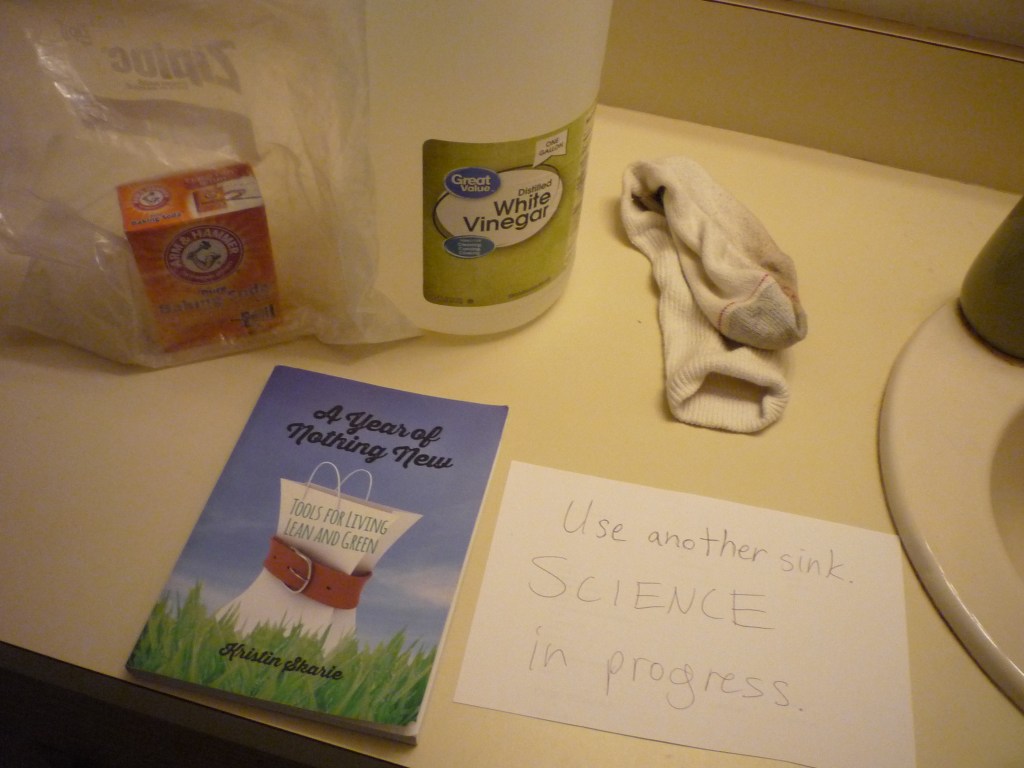
    • Update: The drain in my bathroom sink loves to grow mold every couple of months. My parents have been using toxic drain cleaner to clean it, but I followed Kristin’s recipe in her book A Year of Nothing New to clean the drain with the volcano science experiment that I actually facilitate at the Orlando Science Center during some programs. It is the simple addition of baking soda and vinegar. Although I couldn’t add as much baking soda as the recipe suggested because the drain was clogged with it, the experiment worked and the drain was cleaned. Yay for green chemistry!
  • Tool 10 Track Your Trash goal: research and purchase reusable cloth feminine products
    • Update: I did some online research into options, and I settled on an Etsy store called Yurtcraft. I ordered two reusable liners and one reusable pad to try out. Since they are toiletries and aimed at reducing my disposable waste, I’m not adding them to the fund.
  • Tool 11 Guzzle Less Gas goal: begin tracking gas/train/bike usage
    • Update: I finally compiled my data and have done the following since the beginning of my four months of nothing new challenge: avoided using 50 gallons of gasoline in my car by taking the train and biking, taken the train round trip 24 times, biked 39 miles, and driven 4,235 miles in my car. My driving commute to work is about 30 miles, to my internship is about 25 miles, and to Give Kids is about 10 miles.
  • Continued tracking time volunteering/interning/working
    • Update: Since I started my four months of nothing new, I have worked a total of 256.5 hours at the Orlando Science Center and volunteered a total of 178.5 hours, which includes time spent at Give Kids the World Village, Dr. Phillips Center, and interning with IDEAS For Us. I’ve also spent an estimated total of 173.5 hours commuting to all of those things, so that takes up a large portion of my time as well.
If you look closely, you can see the beans that are starting to grow.
Baking soda + vinegar = carbon dioxide and a clean drain

Goals that I still need to implement:

  • Tool 3 Eat Local goals: look into IDEAS for Us farmers market; start tracking meatless day/part-time vegetarian, in addition to already eating mostly plant-based
  • Tool 6 Consume Less Plastic goal: consider a mini-goal of only buying products with recyclable packaging for a certain amount of time
  • Tool 10 Track Your Trash goals: research waste collection/recycling in Orlando and Kissimmee, look into visiting a landfill, look into composting, consider doing a waste/water audit and carrying trash, consider not using paper towels for personal bathroom trips for a certain amount of time
  • Tool 11 Guzzle Less Gas goals: calculate my carbon footprint, ultimately donate to offset fund at the end of the four months, conduct cost-benefit analysis of trading in my RAV4 for a hybrid or electric car
  • Additional goals: find and apply to interesting summer opportunities/beyond, determine motivation months based on larger-scale goals

Nothing New Fund for the past week: $7; Current total: $112

I’d like to write about a different sort of sustainability this week. This time, the sustainability that I am addressing is not that of consumer products, how we satisfy the world’s energy needs, or even environmental, for that matter (even though those are the things I was thinking about at 4:30am this morning when I should have been sleeping). Instead, the sustainability that impacts all of us is that of our work schedules. Before the pandemic happened and gave me an abundance of time at home, I was struggling to keep up with my schedule. If I factor in commuting time, I worked and volunteered over 50 hours all but one week and over 60 hours for more than half of the past ten weeks since I began my nothing new challenge. I was starting to get burned out, but I didn’t want to give up any of my work or volunteer positions because they all appealed to a different part of my identity. Now that everything has come to a halt, however, I have a unique opportunity to reflect on the sustainability of my lifestyle (as do you, in all likelihood). Yes, we should reflect on environmental sustainability and the impact that we are making, but also on the sustainability of continuing to do the same things day in and day out.

I worked really hard when I was in college. I stayed on top of all of my classes and was always super involved in extracurricular activities, and I loved staying busy. I felt like I was using my time and talents in the most productive way, and I was enjoying my time, even with all of the stress I often felt. Since graduating, I have managed to stay busy, but I haven’t felt like I have been able to use my talents in a way that is as satisfying or as productive as before. I don’t have all of the answers (honesty, I don’t have very many at all), but I do know that I have sought out change from year to year throughout my life in one way or another, whether intentionally or subconsciously. Hopefully the bright side of this surreal experience that we are all sharing is that we will be more intentional about where we spend our time and talents when many of us are able to return to work and more concerned with the sustainability of our lifestyles (in both the work life and environmental senses, of course). Do your best to live both happily and sustainably and may thee use naught new.
This too shall pass, or all things (good and bad) must come to an end.
Categories
Uncategorized

Weeks 8, 9, and 10: Brought to you by COVID-19

My objective in writing this blog was for me to hold myself accountable for pursuing my sustainability goals and to share my progress, but it has also become a platform for me to share why I am doing a nothing new challenge in the first place, which stems from what I believe. I don’t ask you to agree with everything that I share, but I ask that you at least think about what I have to say. With that, I am going to start with story time and then follow up with the progress of my goals over the past three weeks.

It keeps me up at night worrying about what the future holds. So many questions race through my mind, like why didn’t we act fast enough, why do we continue to wait on taking the drastic measures that science shows we must take, and am I personally doing enough to contribute to the solution of this global problem. I distract myself by working, volunteering, and engaging with the arts, like making music and watching musicals. As with the nature of global issues, there is a lot out of my control, but life happens on a micro-level for each of us. If I can take responsibility for my personal choices and share what I believe is right, then at least I will have done my part in the crisis that we as humanity face.

The previous sentiments may resonate with you in regards to how you are currently feeling about the coronavirus, or COVID-19. However, these are not my feelings about coronavirus. These are the feelings that have plagued me for years regarding the climate crisis. Fear from knowing that people are dying because of this crisis, especially vulnerable populations. Fear that our elected officials (especially Trump) are not prioritizing the public interest in their policy and economic decisions. Fear from plain old uncertainty about how this is going to end. These fears apply to both the pandemic and the climate crisis, but the difference is that fear for the former is now much more widespread.

As I have done in the past, I acknowledge that I am a very privileged person in various ways, and that I do not take it for granted. I am young and healthy and probably would survive if I got the virus. I have the financial privilege to miss a paycheck and still be fine. Because of these things, I am not personally living in fear about the coronavirus. However, I understand the simultaneous need to be informed and the mood depressing effect of staying up-to-date on a global crisis, as I have closely followed climate news, especially in the past year. In spite of the uncertainty and fear, I see so much hope in the current chaos we are experiencing. If we can mobilize everyone on the planet and come together to fight against a virus, we most certainly have the ability to mobilize everyone to fight for a livable future for all life on this planet. However, the climate crisis has not been treated like a crisis because people with unimaginable amounts of wealth don’t want to relinquish their source of wealth, which is the expansion and continued dominance of the fossil fuel industry, a.k.a. the cause of global heating. It also goes to show that we need to start re-framing the climate crisis as a global health crisis, as that is very much what it is. Air pollution from the burning of fossil fuels was identified as a carcinogen to humans by the World Health Organization in 2013, and according to the American Cancer Society, lung cancer is the leading cause of cancer deaths at almost 25 percent. Imagine how many hundreds of thousands of people would be saved from lung cancer in a world powered by clean energy rather than fossil fuels.

Back to the coronavirus, in spite of all of the costs associated with the pandemic, I believe there is a silver lining in which the environment is benefiting. Because people are not working and traveling, air pollution has drastically fallen over Italy and China. People have stopped flying, so airlines aren’t contributing their normal 2 to 3 percent of overall carbon dioxide emissions. With all the lockdowns, greenhouse gas emissions are in sharp decline, which is great for the climate crisis, even if it is temporary. Finally, to tie it back to what my blog is actually about, some shops are closed, which means people are not buying luxuries, at least. Panic buying is another issue I won’t discuss, but you can bet it is not sustainable. Now for my goals.

Goals that I implemented:

  • Tool 1 Stop Shopping goal: no new things except food and gas/try to buy local if new
    • Update: Naught added to the fund.
  • Tool 2 Grow Some Food goal: plant beans in a pot
    • Update: Beany babies are flowering.
  • Tool 4 Buy Local goal: buy from local restaurants and no chains/fast food
    • Update: Ate at two local restaurants. $6 in fund for frozen chai teas from Wawa.
  • Tool 5 Turn Off The Lights goal: no phone until after breakfast and computer off by 9:30pm
    • Update: I had my computer on later than 9:30pm four times, with two of those times much later, so $6 added to the fund.
  • Tool 6 Consume Less Plastic goal: $5 fine for any disposable plastic utensils/straws/plates/cups
    • Update: $35 for four small plastic cups, a plastic lid, and two plastic containers I got as a result of having to take out for a meal. Ugh.
  • Tool 10 Track Your Trash goal: turn off water in shower when not rinsing
    • Update: Naught added to the fund.
  • Continued tracking time volunteering and interning and working.
    • Update: I just reached 700 hours of volunteering at Give Kids the World with my last shift before it closed. In the past three weeks (and a few days), I worked 80.25 hours and volunteered 64.75 hours for a total of 145 hours, not including commuting, which is why I was three weeks behind on my blog.
The beany babies are getting long and lanky.

Goals that I still need to implement:

  • Tool 3 Eat Local goals: look into IDEAS for Us farmers market; start tracking meatless day/part-time vegetarian – here is a great article about the relative importance of eating plant-based rather than local
  • Tool 6 Consume Less Plastic goal: consider a mini-goal of only buying products with recyclable packaging for a certain amount of time
  • Tool 10 Track Your Trash goals: research waste collection/recycling in Orlando and Kissimmee, look into visiting a landfill, look into composting, consider doing a waste/water audit and carrying trash, research reusable feminine products – I have worked on this and plan to report more in my next blog post, consider not using paper towels for personal bathroom trips for a certain amount of time
  • Tool 11 Guzzle Less Gas goals: begin tracking gas usage and train usage, calculate my carbon footprint, ultimately donate to offset fund at the end of the four months, conduct cost-benefit analysis of trading in my RAV4 for a hybrid or electric car
  • Additional goals: find and apply to interesting summer opportunities/beyond, determine motivation months based on larger-scale goals

Nothing New Fund for the past three weeks: $47; Current total: $105

As an introvert, I am enjoying the time off as a result of the coronavirus. I was starting to burn out from working so much, and with schools going on Spring Break, I was considering requesting time off to relax. I will certainly miss volunteering and working and especially the people with whom I did those things, but I have plenty of things to keep me occupied in the meantime. I can catch up on a long list of movies and shows I planned to watch when I finally found some time (which I never would have found if not for the pandemic), read books on my to-read list, learn and practice songs on the piano, do more research and start taking more action as a climate activist, write my blog and pursue more sustainability goals, learn dances for exercise, and maybe even write a few parodies along the way. Create art and make music and may thee use naught new.

A good reminder not to give up on love and hope. I highly recommend listening to the whole Amidst the Chaos album, given that we are.

Categories
Uncategorized

Week 7: Working with what you’ve got

Nothing super exciting happened this past week. Here are my goal updates.

Goals that I implemented:

  • Tool 1 Stop Shopping goal: no new things except food and gas/try to buy local if new
    • Update: Naught added to the fund.
  • Tool 2 Grow Some Food goal: plant beans in a pot
    • Update: Beany babies getting bigger.
  • Tool 4 Buy Local goal: buy from local restaurants and no chains/fast food
    • Update: $3 in fund for frozen chai tea from Wawa (in a paper cup, of course).
  • Tool 5 Turn Off The Lights goal: no phone until after breakfast and computer off by 9:30pm
    • Update: I had my computer on later than 9:30pm once, so $1 added to the fund.
  • Tool 6 Consume Less Plastic goal: $5 fine for any disposable plastic utensils/straws/plates/cups
    • Update: Naught added to the fund.
  • Tool 9 Clean Your Closet goal: donate things I don’t need
    • Update: Returned my Nike shoes that I no longer wanted and recycled my old shoes that had holes in the bottoms.
  • Tool 10 Track Your Trash goal: turn off water in shower when not rinsing
    • Update: Naught added to the fund.
  • Started tracking time volunteering and interning and working.

Goals that I still need to implement:

  • Tool 3 Eat Local goals: look into and try to visit more Orlando and Kissimmee farmers markets and local produce, specifically through IDEAS for Us; start tracking meatless day/part-time vegetarian, in addition to already eating mostly plant-based
  • Tool 6 Consume Less Plastic goal: consider a mini-goal of only buying products with recyclable packaging for a certain amount of time
  • Tool 10 Track Your Trash goals: research waste collection/recycling in Orlando and Kissimmee, look into visiting a landfill, look into composting, consider doing a waste/water audit and carrying trash, research reusable feminine products, consider not using paper towels for personal bathroom trips for a certain amount of time
  • Tool 11 Guzzle Less Gas goals: begin tracking gas usage and train usage, calculate my carbon footprint, ultimately donate to offset fund at the end of the four months, conduct cost-benefit analysis of trading in my RAV4 for a hybrid or electric car
  • Additional goals: find and apply to interesting summer opportunities/beyond, determine motivation months based on larger-scale goals
  • Nothing New Fund this week: $4; Current total: $58

Now that it is Day 50 of my four months of nothing new, I finally started analyzing where I spend my time on a weekly basis. Since January 4th, I have spent 176.25 hours working at the Orlando Science Center and 109 hours volunteering at Give Kids the World, IDEAS For Us, and the Dr. Phillips Center (not including commuting times, which would probably add around 80 hours to the count, to give a rough estimate). According to Independent Sector’s most recent 2018 data, the value of a volunteer hour in Florida was $24.04 per hour, which would mean that I have contributed about $2,620 worth of time to non-profits in my community in the past 50 days alone (in addition to working at a non-profit, which I am paid to do at less than the volunteer hour value rate). Spending my time volunteering is certainly a privilege that I am thankful for, in the sense that I am financially able to work without being paid and I do not have to devote my time to other things out of necessity. Like they say, if you do what you love, you won’t work a day in your life. In my case, it’s because doing what I love is actually volunteering. Although I do enjoy working at the science center, I am not using my skills in the best way and engaging with what I really care about, and my career goal is not to be an educator or teacher. I would prefer to get more involved with sustainability work, perhaps through IDEAS For Us, so I will see what opportunities come my way. Until then, there are worse jobs I could have than one in which I teach kids about engineering (which is somewhat counterintuitively the focus of the majority of our programs, rather than science).

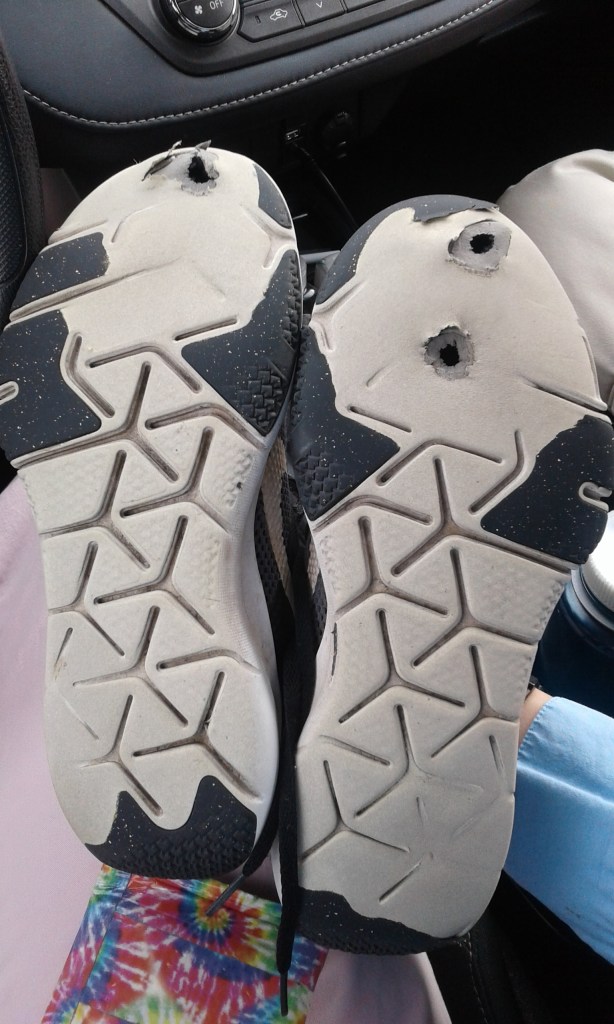
I have two things that I addressed in previous posts on which I will share updates before sharing about what happened today. As Kristin mentions in the Leadership Lessons chapter of her book, A Year of Nothing New, bad shoes should be released because life is long. During my search for places to recycle textiles, I found that Nike’s Reuse-A-Shoe program accepts old athletic shoes that it recycles into new things. The shoes that I bought from Walmart turned out to give me one of the most painless breaking-in periods I have had with shoes in a while, so I felt confident in my ability to get rid of my shoes that had holes in the bottoms. I dropped my old shoes off in the bin in the Nike Clearance Store, and then I also returned my $60 orange athletic shoes that I had bought during a previous trip there, prior to deciding that I would not buy from Nike anymore. In spite of spending multiple hours looking for and trying on shoes to find ones like those, I decided that I can spend that money on better things that will help me decrease my footprint instead of leaving more.

My holey shoes. Also, my homemade duct tape wallet, which is my third since I started making them for myself five years and a few months ago.
Re-Use-A-Shoe bin in the Nike Clearance Store.

I was also able to recycle my polystyrene bowl that I had received during a previous week at Publix today. Most places unfortunately do not recycle polystyrene (brand named Styrofoam), which is plastic number 6, because it is so lightweight and therefore costs more to recycle, but Publix does.

Publix recycling bin out front.

Something else that happened today was that I was given the opportunity to switch to a newer phone. I could have switched to one of two newer used phones that we already had from my sister (who was buying new ones), or I could have gotten a new phone entirely. I ended up declining all offers on the basis of naught new and not wanting the hassle of changing from the phone that I am used to and the only smart phone that I have ever owned (since I first got it during the summer of 2017 as a requirement for my study abroad program in India). I haven’t deliberately researched smart phones since I have no interest in getting a new one until the one that I have completely breaks (and the same goes for my seven-year-old laptop which is still going strong), but the rate at which they are updated and the newest versions sold seems incredibly unsustainable, given that they are made from a limited amount of precious metals mined from the Earth. All of the deals that you can get with service and data plans and upgrades that provide you with a new phone “for free” epitomize the problem of environmental externalities in a consumption-based economic system that values short-term profits over long-term benefits and the reduction of environmental degradation. In case you don’t speak economics, an externality is an unintended consequence of producing and consuming a product that is felt by a third party, or put another way, a cost that is not factored into the cost of a product. Environmental externalities include things like pollution, the deforestation of vital rainforests, and the depletion of precious metals. The willingness that people have to get a new phone for the sake of having the latest edition while their current phone works perfectly well is the result of disregarding the hidden costs to our planet because they don’t have to pay for it personally. Hopefully you think twice about getting a new phone when the next edition comes out (I’m looking at you, iPhone 12).

Researching the environmental impacts that we as consumers are responsible for is a double-edged sword of sorts. It can be discouraging to think about how much environmental degradation we are each causing, but at the same time, there is comfort in the fact that we can clear our conscience by controlling our individual contributions through our purchasing decisions. If it ain’t broke, don’t buy a new one, and may thee use naught new.

I’ve always loved this song (and Captain Eo in general), and someday I will finish learning the dance routine.
Categories
Uncategorized

Week 6: It’s about time.

This post is about time, that is.

I did a little better this week with not using one-time-use plastic, but I still haven’t had enough time off to actually work on my additional goals, so there aren’t many updates this week.

Goals that I implemented:

  • Tool 1 Stop Shopping goal: no new things except food and gas/try to buy local if new
    • Update: Naught added to the fund.
  • Tool 2 Grow Some Food goal: plant beans in a pot
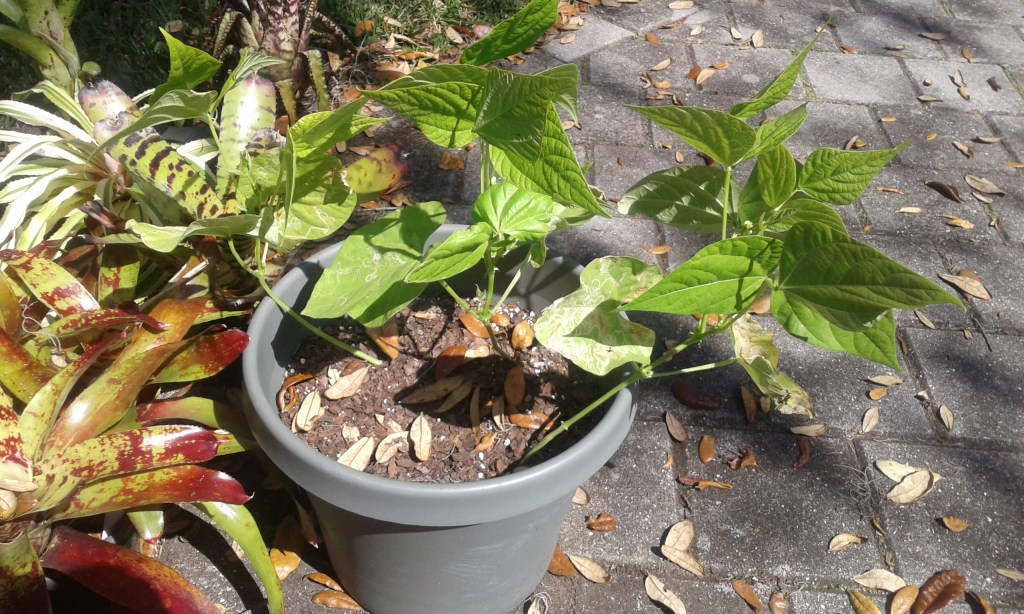
    • Update: My bean plants actually did grow. I just needed to give them some more time and water. I’ll report back when they give me food.
  • Tool 4 Buy Local goal: buy from local restaurants and no chains/fast food
    • Update: $5 in fund for frozen chai tea latte from Wawa because it’s a chain, but I got it in a paper cup and used my own straw, so no plastic.
  • Tool 5 Turn Off The Lights goal: no phone until after breakfast and computer off by 9:30pm
    • Update: I had my computer on later than 9:30pm once, so $1 added to the fund.
  • Tool 6 Consume Less Plastic goal: $5 fine for any disposable plastic utensils/straws/plates/cups
    • Update: Naught added to the fund.
  • Tool 7 Detox Yourself goal: detox laundry detergent
    • Update: Done
  • Tool 8 Make Stuff goal: make things and use what I have for gifts
    • Update: Done
  • Tool 9 Clean Your Closet goal: donate things I don’t need
    • Update: Done
  • Tool 10 Track Your Trash goal: turn off water in shower when not rinsing
    • Update: Naught added to the fund.
How big my beany babies are, as of today. Other plants featured are my dad’s bromeliads.

Goals that I still need to implement:

  • Tool 3 Eat Local goals: look into and try to visit more Orlando and Kissimmee farmers markets and local produce, specifically through IDEAS for Us; start tracking meatless day/part-time vegetarian, in addition to already eating mostly plant-based
  • Tool 6 Consume Less Plastic goal: consider a mini-goal of only buying products with recyclable packaging for a certain amount of time
  • Tool 10 Track Your Trash goals: research waste collection/recycling in Orlando and Kissimmee, look into visiting a landfill, look into composting, consider doing a waste/water audit and carrying trash, research reusable feminine products, consider not using paper towels for personal bathroom trips for a certain amount of time
  • Tool 11 Guzzle Less Gas goals: begin tracking gas usage and train usage, calculate my carbon footprint, ultimately donate to offset fund at the end of the four months, conduct cost-benefit analysis of trading in my RAV4 for a hybrid or electric car
  • Additional goals: track time volunteering and interning and working, find and apply to interesting summer opportunities/beyond, determine motivation months based on larger-scale goals
  • Nothing New Fund this week: $6; Current total: $54

I was able to drive/take the train/bike to my internship on both Wednesday and Friday, so that transportation method has now been implemented. Since I haven’t made much progress on my additional goals (yet), I’ll move on to a story about the only goal on which I sort of made some progress.

For a couple of weeks, there was no sign of life in the pot where I planted my beans. I wasn’t paying super close attention to them with how busy I always am, but it seemed like they weren’t going to make it, so I was planning to plant some other seeds that I had saved from my days of gardening in college (check out the photo in my first post and the photo of my garden on the home page of this blog). Then, once I forgot about them, they sprouted. Sorry in advance for the lame analogy, but here it is. Like my beany babies[sic], sometimes I just don’t give myself enough time to grow. Working and volunteering so much lately has me feeling like I’m falling behind, or like I’m not doing enough, even though it’s not possible for me to do any more at the moment. I’m always thinking of the Red Queen hypothesis, an evolutionary hypothesis that proposes that we have to constantly adapt and change just to be competitive and survive. In other words, we have to move as fast as we can just to stay in one place. However, my beans remind me that I’ll eventually get to my goals and ultimately end up where I’m supposed to be, even if it takes some time. I just need to be patient and persistent.

My beans aren’t the only thing that remind me of this lesson. Just as monitored beans never sprout and a watched pot never boils, observed small robots never charge. I’ve recently worked a few science festivals in which I’ve hosted activities with small robots called Ozobots, and it always takes the last couple of Ozobots five-ever to charge at the end of a long day. The point is that life is short, but only if you are moving so fast that you don’t take time to enjoy it and reflect on its meaning every once in a while. In a year or two, I’m hopefully not going to look back on my four months of nothing new and think about how long it took me to implement my goals, but instead be happy that I took the time to turn them into long-term habits that help me live a more sustainable life. Eat vegetables, get sleep, be happy, and may thee use naught new.

Sometimes you just need a reminder of what’s important in life.
Categories
Uncategorized

Weeks 4 and 5: Making choices

Hi, my name is Christy, and sometimes I’m a workaholic. Not to the extent that it is impacting my health, because I usually get enough sleep and a good amount of exercise, but to the point that I did not have a day off from either working or volunteering over the past two weeks, so I was not able to write last week’s blog post. I now work a part-time job, an unpaid internship, and volunteer for two places, so I’m enjoying filling my time and staying occupied. However, the downside is that I have less free time to pursue my sustainability goals, so I do what I can when I find time. At this point, you know the drill. Goal updates and then story time.

Goals that I implemented:

  • Tool 1 Stop Shopping goal: no new things except food and gas/try to buy local if new
    • Update: The only things I bought were gas and food, so nothing added to fund. I also got an oil change and tire rotation, but I won’t count those because they are needed to take care of my car.
  • Tool 4 Buy Local goal: buy from local restaurants and no chains/fast food
    • Update: $5 in fund for quesadilla at Wawa (chain, but came in cardboard, which is better than polystyrene, aka Styrofoam)
  • Tool 5 Turn Off The Lights goal: no phone until after breakfast and computer off by 9:30pm
    • Update: I had my computer on later than 9:30pm twice, so $2 added to the fund.
  • Tool 6 Consume Less Plastic goal: $5 fine for any disposable plastic utensils/straws/plates/cups
    • Update: $5 in fund for polystyrene bowl (I will try to recycle it at Publix)
  • Tool 7 Detox Yourself goal: detox laundry detergent
    • Update: Done
  • Tool 8 Make Stuff goal: make things and use what I have for gifts
    • Update: Done
  • Tool 9 Clean Your Closet goal: donate things I don’t need
    • Update: Done
  • Tool 10 Track Your Trash goal: turn off water in shower when not rinsing
    • Update: $1 in fund for leaving the water on while rinsing

Goals that I still need to implement:

  • Tool 2 Grow Some Food goal: plant beans in a pot
    • Update: My beans did not grow, so I will try again with more/other seeds.
  • Tool 3 Eat Local goals: look into and try to visit more Orlando and Kissimmee farmers markets and local produce, specifically through IDEAS for Us; start tracking meatless day/part-time vegetarian, in addition to already eating mostly plant-based
  • Tool 6 Consume Less Plastic goal: consider a mini-goal of only buying products with recyclable packaging for a certain amount of time
  • Tool 10 Track Your Trash goals: research waste collection/recycling in Orlando and Kissimmee, look into visiting a landfill, look into composting, consider doing a waste/water audit and carrying trash, research reusable feminine products, consider not using paper towels for personal bathroom trips for a certain amount of time
  • Tool 11 Guzzle Less Gas goals: begin tracking gas usage and train usage, calculate my carbon footprint, ultimately donate to offset fund at the end of the four months, conduct cost-benefit analysis of trading in my RAV4 for a hybrid or electric car
  • Additional goals: track time volunteering and interning and working, find and apply to interesting summer opportunities/beyond, determine motivation months based on larger-scale goals

Nothing New Fund this week: $13; Current total: $48

Given my busy schedule, I have not carved out time to work on my additional goals, but like I mentioned, I will get to them when I can. Specifically I would like to research recycling and make an Excel document of my gas and train (and now bike) usage as well as time usage, as I have the data, but I have not compiled them. Speaking of bikes, allow me to share a story of struggle and the solution that surfaced. (Can you tell I have an affinity for alliteration?)

For the past few months, I have been driving ten minutes to the nearest SunRail station, taking the SunRail train into Orlando, and then walking 0.3 miles (about five minutes) to get to the Orlando Science Center. I take the train whenever I can, because it is safer, more reliable, cheaper, better for the environment, and I can use that time to do something that I can’t do while driving. I also don’t save much time by driving, because I have to leave early enough to ensure that I arrive on time even if there is traffic. The location of the office where I work on grant-writing for my internship with Orlando-based non-profit IDEAS For Us is about 1.4 miles from the nearest SunRail station, so it only made sense that I would try to do the same for my internship. However, the office is located in a not-so-nice part of the city, so the first time I tried to walk to and from the station, I was heckled by some people as I walked by and did not feel safe. I decided to give my bike a try instead, because that way I would feel slightly safer than I would when walking (another safety risk being cars, but I luckily have good bike brakes and always assume they won’t stop for me/see me). On one of my first days traveling to my internship, I drove on the Turnpike and I-4 as I do when I have to drive to work at the science center, and I was half an hour late because of a seven-car crash on the Turnpike that left only one lane open. After also hearing about a deadly crash on the Turnpike going southbound on a day that I took I-4 into Kissimmee to spontaneously volunteer after work instead of driving home, I took it as a sign to drive as little as possible.

This past Tuesday, I had a ten hour work shift before my usual three hour volunteer shift in the evening (not including my commutes to and from Orlando and the other side of Kissimmee), and I had already been working for over a week without a day off, so you could say my judgment was a little impaired. I obviously didn’t have time to work on my sustainability goals much, but I still wanted to get the ball rolling, so I decided that the next day, I would bike to the train station from home, take my bike on the train, and then bike to the internship office so that I wouldn’t have to drive at all. I confirmed a place to store it at the office with my supervisor, filled my tires up to the recommended air pressure, and made my time calculations based on Google Maps and the train schedules in order to get to the office on time. The train station is 4.7 miles away, and Google told me it would take 23 minutes to bike there. I gave myself seven minutes buffer time knowing that the trains always come and depart three minutes before their scheduled time, so about half an hour.

My bike on the SunRail on the way home from the office.

Two things I did not consider: although I am in good shape overall, it has probably been a few months since the last time I rode my bike, and my backpack with my laptop and other supplies in it weighs about 13 pounds (which I determined after the fact). I started my emissions-free commute that morning, and when I was about halfway, it seemed like it was taking me longer than Google told me it would. I’m pretty good at accepting challenges, so I started speeding up, and I ended up having to pedal as fast as I could for the last few miles to make it on time. It was a cool morning, so I wore long sleeves, pants, and a vest, so by the time I made it to the train station, I was sweaty, smelly, and tired. I narrowly made it onto my train, and I made it to the office on time, but let’s just say that my physical appearance wasn’t what it could have been. After my time in the office was up for the day, I made my way back to the train station, being careful not to be hit by any cars, and took the train back to my home station. I thought my ride back home would be leisurely, because I had no other plans for the day and no deadlines. I took it really slowly, mostly because I was tired, but by the time I made it home, I was absolutely exhausted. I felt like I had just run ten miles (and I know what that feels like because I did that when training for a ten-miler race in high school). Yeah, my commute was emissions-free, but biking 12.2 miles total that day with 13 pounds on my back wasn’t the most sustainable choice. A short cost-benefit analysis reveals, in retrospect, the obvious solution: driving the ten minutes to the train station with my bike in the trunk, taking my bike on the train, and then biking to the office maximizes my benefit. I am saving money over driving to the office, I am saving time and sweat over biking to the train station and then taking the train or driving to the office, I am being environmentally friendly over driving to the office, I am being slightly safer by driving/riding the train/biking than if I were driving to the office, biking/riding the train/biking, or driving/riding the train/walking, and I get a little bit of exercise but not too much by biking 2.8 miles total. I’ll give my new method a go next Wednesday.

Something that I have pondered over the past few months is how I choose to spend my time, and I wrote a parody about it, which I think also applies to the choices we make regarding how sustainably we live. I recorded myself singing it while accompanying myself on the ukulele, so please enjoy this rare recording of one of my parodies below. I also have a parody blog where I post the lyrics to parodies that I write, so you can find the lyrics for Simple Choice here. Living an imperfect zero-waste life is better than not reducing your impact at all, considering the trade-offs and circumstances we encounter, so don’t give up. Try to reduce both fate’s temptation and your environmental impact and may thee use naught new.

I got around upgrading my site to upload audio by making a YouTube account, turning my audio file into a video, and then uploading, so don’t get used to this.
Categories
Uncategorized

Week 3: Busy as can be

This week, I started a grant-writing internship with IDEAS For Us, a sustainability-focused non-profit in Orlando, so that’s what I will be doing on Wednesdays and Fridays until the end of April. I started working with the organization back in August to help plan the September 20th and December 6th Orlando climate strikes, so it wasn’t that far of a leap to get more involved. We are currently planning the next global climate strike for April 22nd, which will be the 50th anniversary of Earth Day, so I highly encourage you to plan to attend a local strike. You’ll be able to find a local strike on this website once people start registering their events: https://strikewithus.org/. I’m also starting my training to volunteer at the Dr. Phillips Center for the Performing Arts on the weekends in addition to volunteering at Give Kids the World in the evenings, so I’m definitely filling my time with commitments. Unless I start signing up for five-hour Dr. Phillips Center shifts on the weekends (and I already have a few for tomorrow, next Saturday, and next Sunday), I usually have those days off to work on my nothing new goals, as follows.

Goals that I implemented:

  • Tool 1 Stop Shopping goal: no new things except food and gas/try to buy local if new
    • Update: $10 added to fund for new shoes; I also bought a $5 postcard, but I’m not adding to the fund for it because it was art from a local artist and I declined the plastic sleeve that it could come in.
  • Tool 2 Grow Some Food goal: plant beans in a pot
    • Update: I finally did it today, January 25th.
  • Tool 4 Buy Local goal: buy from local restaurants and no chains/fast food
    • Update: 1 local, plant-based restaurant
  • Tool 5 Turn Off The Lights goal: no phone until after breakfast and computer off by 9:30pm
    • Update: I had my computer on later than 9:30pm once, so $1 added to the fund.
  • Tool 6 Consume Less Plastic goal: $5 fine for any disposable plastic utensils/straws/plates/cups
    • Update: $10 added to fund for a small plastic plate and cup
  • Tool 7 Detox Yourself goal: detox laundry detergent
    • Update: After some internet research, I bought Seventh Generation Free and Clear, which is 97% bio-based, which to me is far superior to the cheapest detergents that don’t even have their ingredients listed. I’m not adding it to the fund because it is for my household and rather necessary for cleaning clothes.
  • Tool 8 Make Stuff goal: make things and use what I have for gifts
    • Update: Done
  • Tool 9 Clean Your Closet goal: donate things I don’t need and research textile recycling
    • Update: Most of my clothes donations were picked up today by Red Cross. I did some online research on textile recycling for old clothes that are no longer usable, and according to this article, Salvation Army sends what they cannot sell in their stores to be recycled as rags, which is better than throwing it in the landfill. Another option is to buy a TerraCycle box, but because I only had a few pairs of old shorts, that was not a cost-effective option for me. I included my old shorts with some books and other things that I donated to Salvation Army today.
  • Tool 10 Track Your Trash goal: turn off water in shower when not rinsing
    • Update: Ongoing
Shoes, laundry detergent, and a Michael Jackson art print were things I bought this week.

Goals that I still need to implement:

  • Tool 3 Eat Local goals: look into and try to visit more Orlando and Kissimmee farmers markets and local produce, specifically through IDEAS For Us; start tracking meatless day/part-time vegetarian, because I already eat mostly plant-based, but I don’t keep track
  • Tool 6 Consume Less Plastic goal: consider a mini-goal of only buying products with recyclable packaging for a certain amount of time or All-In-One Zero Waste Box from TerraCycle
  • Tool 10 Track Your Trash goals: research waste collection/recycling in Orlando and Kissimmee, look into visiting a landfill, look into composting, consider doing a waste/water audit and carrying trash, research reusable feminine products, consider not using paper towels for personal bathroom trips for a certain amount of time
  • Tool 11 Guzzle Less Gas goals: begin tracking gas usage and train usage, calculate my carbon footprint, ultimately donate to offset fund at the end of the four months, conduct cost-benefit analysis of trading in my RAV4 for a hybrid or electric car
  • Additional goals: track time volunteering and interning and working, find and apply to interesting summer opportunities, determine motivation months based on larger-scale goals

Nothing New Fund this week: $21; Current total: $35

It looks like the goals that I still need to implement are mainly associated with eating local food, tracking my trash, and starting to calculate my gas versus train usage and how I spend my time. Now for a story.

I noted above that I am putting $10 into my fund for buying new shoes. I bought a pair of black shoes for $10 today from Walmart because I need completely black shoes with no logos to comply with the Dr. Phillips Center dress code, and my first volunteer training shift is tomorrow. Plus, both of the pairs of shoes that I currently wear have holes in the bottoms, so I am ready to not have wet feet when the ground is wet and to stop making holes in my socks. Yes, I wear my shoes until they literally have holes in the bottoms in order to make the most of them as a sustainable practice, but there is another, more compelling reason.

I started buying my shoes from Nike Clearance Store in high school for sports, and I’ve been shopping there and at Sketchers for shoes pretty much ever since. For the past six years or so, I have been paying more than I would like to for a pair of shoes, generally between $30 and $50. I do a lot of moving around, so I wanted high-quality athletic shoes that would last. It didn’t occur to me before, but I recently saw something that someone posted online about how Nike workers get paid low wages and work long hours, so I’m now trying Walmart shoes and planning not to buy from Nike anymore. Not that Walmart has a great record or anything, but it’s cheap. In addition to being much cheaper, Walmart shoes so far seem to fit better, so hopefully they are good enough for standing, walking, and jumping in.

Although my desire to live sustainably and frugally contributes to how long I wear shoes, the more compelling reason is my feet. Back in eighth grade, I had an arch injury while playing basketball that was caused in large part by a lack of arch support in the shoes that I wore. The injury was never really diagnosed, in spite of how I explained it to my doctor and a podiatrist. The prescription that I was given was to always wear arch supports in my shoes, which I have done with every pair of shoes that I have worn ever since. Arch supports, which many people wear for comfort or ergonomics, are what allow me to continue to jump and dance and run and walk. However, a fact of my life since the injury and part of the prescription from the podiatrist is that I can no longer walk barefoot for more than a few steps before I need to put my shoes back on. Because my arches, specifically the arch in my left foot where the injury took place, are so sensitive, it takes me a while to break in new shoes, and unfortunately I have often had to return shoes that I just could not wear because they were hurting my arch too much while I tried to break them in. It gives a whole new meaning to walking a mile in my shoes.

The point of my story is to say that necessity is not only the mother of invention, but also the mother of sustainability. If I didn’t have “messed-up” feet, which is how I endearingly refer to them, then I most likely would not wear shoes for as long as I do. The limiting factor for new purchases for many people in our global human population is limited funds, and so they make do with what they already have and are content and capable of doing so. Besides shoes, I haven’t bought new clothes in years, aside from the occasional costume pieces for Halloween or other events, which I generally buy used from Salvation Army or Goodwill. As long as I’m not growing or shrinking (which I haven’t since about my junior year of high school), then I don’t see any reason to buy new clothes. After a year in AmeriCorps NCCC wearing the same three or four sets of uniforms and two or three of my own outfits, I came home and felt like I had so many clothes that I did not need. As Kristin discusses in her book A Year of Nothing New (which I, again, encourage you to buy used/borrow and read), a fashion fast (instead of fast fashion) of only wearing a certain number of outfits can change your perspective on how much you really need. Live simply and may thee use naught new.

I love this album because it’s so encouraging. This song reminds me that the only thing that we as individuals can do to change the world is our very best.
Categories
Uncategorized

Week 2: #DoBetterOUC

I’m only two weeks into my four months of nothing new and I can already relate to Kristin’s need for motivation months. Given that lifestyle changes take time and intentionality, it might take me a few weeks (or months) to get all of my goals implemented. If you’re trying something like this, maybe start with just a few goals and then add some more once you’ve got those pretty well established. For this update, I’ll go ahead and get started with the goals that I have been working on, and then I’ll list what I still need to start working on before sharing a few stories.

Goals that I implemented:

  • Tool 1 Stop Shopping goal: no new things except food and gas/try to buy local if new
    • Update: $0 added to fund
  • Tool 4 Buy Local goal: buy from local restaurants and no chains/fast food
    • Update: 1 local restaurant
  • Tool 5 Turn Off The Lights goal: no phone until after breakfast and computer off by 9:30pm
    • Update: I had my phone on once before breakfast to see if I was called in for work and had my computer on later than 9:30pm two times. Let’s say $3 in fund, because the punishment is already elevated cortisol levels and delayed melatonin release for sleep onset.
  • Tool 6 Consume Less Plastic goal: $5 fine for any disposable plastic utensils/straws/plates/cups
    • Update: $0 added to fund (yay)
  • Tool 7 Detox Yourself goal: make my own soap
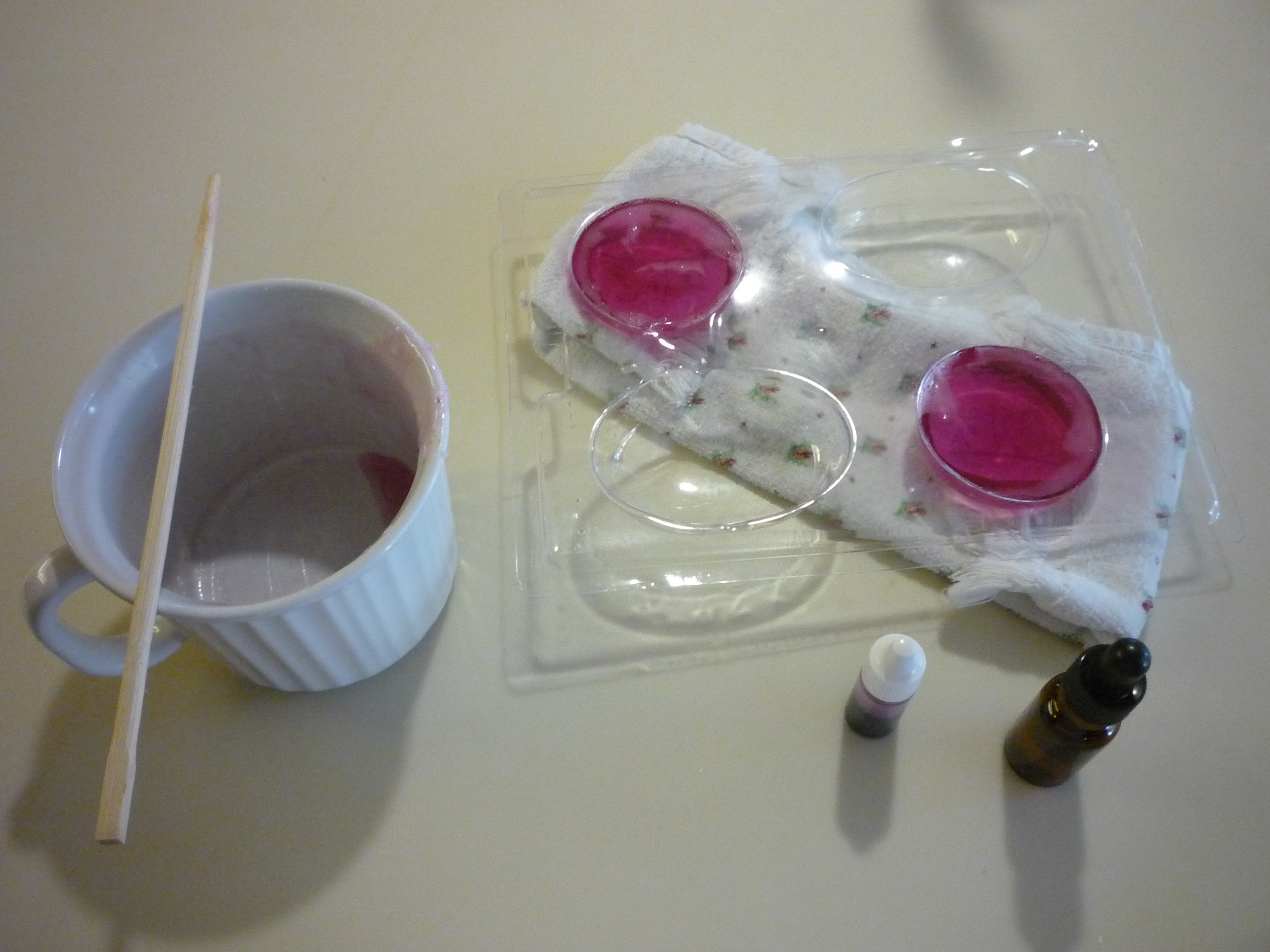
    • Update: I made 3 bars of soap that look like flies trapped in amber because fossils are cool. See photo below. Also, I would love to make you some of my novel soap if you would like, just let me know.
  • Tool 8 Make Stuff goal: make things and use what I have for gifts
    • Update: a gift recipient enjoyed their homemade gift
  • Tool 9 Clean Your Closet goal: donate things I don’t need
    • Update: collected clothes and prepared them for donation pickup in a week
  • Tool 10 Track Your Trash goal: turn off water in shower when not rinsing
    • Update: I usually remembered, but caught myself zoning out once or twice with the water on and then turned it off. Let’s say $2 in fund.
Why have normal soap when you can have fossil flies trapped in amber soap?

Goals that I still need to implement:

  • Tool 2 Grow Some Food goal: plant beans after looking into temperatures and making sure it will be warm enough for them
  • Tool 3 Eat Local goals: look into and try to visit more Orlando and Kissimmee farmers markets and local produce; start tracking meatless day/part-time vegetarian
  • Tool 6 Consume Less Plastic goal: consider a mini-goal of only buying products with recyclable packaging for a certain amount of time
  • Tool 7 Detox Yourself goal: detox laundry detergent by buying greener brand
  • Tool 9 Clean Your Closet goal: research textile recycling as an option for holey, old clothes
  • Tool 10 Track Your Trash goals: research waste collection/recycling in Orlando and Kissimmee, look into visiting a landfill, look into composting, consider doing a waste/water audit and carrying trash, research reusable feminine products, consider not using paper towels for personal bathroom trips for a certain amount of time
  • Tool 11 Guzzle Less Gas goals: begin tracking gas usage and train usage, calculate my carbon footprint, ultimately donate my naught new fund to offset my carbon footprint at the end of the four months, conduct cost-benefit analysis of trading in my RAV4 for a hybrid or electric car
  • Additional goals: track time volunteering and interning and working, find and apply to interesting summer opportunities, determine motivation months based on larger-scale goals
  • Nothing New Fund this week: $5; Current total:  $14

I still have quite a bit of research to do in order to implement some more goals, but I’ll get there eventually. Now for story time.

Through my job as an educator at the Orlando Science Center, I present an OUC (Orlando Utilities Commission) grant-funded program in elementary schools. In the fall, we educated fifth graders about renewable energy and solar power, and now that it is spring, we are presenting on water conservation. I gave one of those presentations on Monday, and I’ll probably be giving more over the next few weeks. A cheesy joke that I use for both presentations during the slide about safety is as follows: If I get up at 4:30am (which I actually had to do on the first day I made this joke) and I’m running late and I want to both take a shower and eat breakfast, should I take my toaster into the shower with me? No, because you should never eat soggy waffles. You also shouldn’t because water is a good conductor of electricity, so you could get electrocuted. (That’s the end.) The curriculum could use an update so that it actually teaches kids about ways that they can conserve water, and there is also a need to streamline a few other things that are very logistically cumbersome for the educators, but you get my point.

Time to be frank. It is great to teach kids about sustainability and conservation, but it is also important to practice what you preach. On Tuesday night, I attended an OUC Community Forum (as I did a few times in December), and it was the same as the previous ones that I attended. OUC is a utility company that provides electricity to much of Orlando, and on their website they like to brag about their green initiatives and their use of solar power. However, if you actually look at statistics, they tell a different story. At the meetings, they shared that OUC’s current portfolio mix (or the combination of energy sources they are currently using to generate electricity) is 54% natural gas, 41% coal, 3% nuclear, 1% landfill gas, and 1% solar. According to OUC’s most recent financial report from 2018 (which I read on my phone during the meeting because I had heard the information multiple times already), the overall fuel mix from 2018 was 50.3% coal, 41.7% natural gas, 5.7% nuclear, and 2.2% (unspecified) renewable. If the numbers that they provided during the meetings represent the overall 2019 fuel mix, then there may have been some changes in regard to which fossil fuel OUC is the most reliant on, but the percentage of solar has not significantly grown in the last five years. Renewable energy, which includes other sources besides solar, constituted only 1% of the fuel mix in 2014 and it only grew to 2.2% through 2018 (and 2019 it appears). During the meeting, OUC shared that its portfolio mix for 2025 is going to be 50% natural gas, 33% coal, 13% solar, 3% nuclear, and 1% landfill gas. They were trying to highlight how much they plan to expand solar, ignoring the fact that they plan to continue burning the most carbon-heavy of fossil fuels to generate a third of their electricity five precious years from now.

Obviously I could go on and on, but I’ll end with #DoBetterOUC. Cultivate your vehement opposition to injustice and may thee use naught new.

When fossil fuel companies tell us that 100% renewable energy can’t fulfill our energy needs. (If you think you’re woke, know that Jonathan Larson wrote this song in 1990).

Design a site like this with WordPress.com
Get started