Categories
Uncategorized

Two years later: Plastic Diet

Hello, friends! It has been a few years since I last posted on this blog. To recap, at the beginning of 2020, I made a set of personal sustainability goals based on a book called A Year of Nothing New by my friend, Kristin Skarie, and I wrote about my weekly progress. There have been quite a few updates in my life in the past two years since then, so I wanted to share what has changed during my ongoing sustainability journey.

To quickly list my previous goals from my four months and then five weeks of Naught New, I aimed to buy nothing new except food and gas, grow vegetables, find a local farmers market, be a pescatarian/part-time vegetarian, eat at local restaurants and avoid chains or fast food, turn my computer off earlier than bedtime, only buy products with recyclable packaging, avoid disposable plastic, make my own soap, detox deodorant and laundry detergent, make or get second-hand things as gifts, donate clothes I don’t need, compost, turn off the water in the shower whenever I’m not rinsing, track my car versus public transportation usage, calculate my carbon footprint, and eventually upgrade from a gas vehicle to an electric vehicle.

Since then, I’ve accomplished some of the goals that I wasn’t able to before. In the past few years, I transitioned between multiple jobs, moved to an apartment closer to Orlando, upgraded my technology, and changed my diet. The major changes that I’ve been able to make include composting my food scraps with O-Town Compost, becoming a vegetarian and vegan when possible, shopping at farmers markets for most of my food, reducing my plastic packaging and consumption of processed food, and ordering a new mattress (which was the most recent occurrence). Most of what I’ve changed has to do with food, and little bit has to do with sleep.

Food

During my four months and five weeks of Naught New in 2020, I found it difficult to compost on my own. I started working for O-Town Compost and found that bringing my food scraps to work to be composted on a community scale was much easier and more convenient. I transitioned from working for O-Town Compost to working for the CLEO Institute about two and a half months ago, so I also transitioned from being a driver to being a subscriber with O-Town Compost. Composting food scraps is a climate solution because organic waste that gets sent to the landfill doesn’t break down in the anaerobic conditions and instead releases methane, a very potent greenhouse gas. I highly recommend composting personally or finding a community composter like O-Town Compost to take your food scraps. If you are in the Central Florida area and are thinking of subscribing to O-Town Compost, use this referral code to get $10 off and so will I: https://tinyurl.com/2c8onj26.

Being closer to Orlando and visiting farmers markets each week has also allowed me to start eating much more locally and reduce my plastic packaging. I subscribed to Fleet Farming’s CSA, or Community Supported Agriculture program, which means I receive a share of produce from local gardens every week. I bring my own tote bag and reuse food containers, so I’m not disposing of any packaging. I’m eating healthy, organic, vegan, and hyper-local food that reduces fossil fuel use by avoiding transport and packaging. I’m supporting local, small farming programs and businesses. I’ve done my best to be a vegan, although I tend to still eat cheese and some dairy when I’m not cooking for myself, given that those things are hard to avoid when going out to eat or receiving free food. I also supplement what I get from the farmers market with a few meals from the grocery store each week. I can continue to avoid plastic by buying canned beans and boxed pasta, but it is unavoidable with certain frozen vegetables and other meals.

My rainbow of produce from the farmers market.

There are always trade-offs in sustainable eating, and I fully acknowledge that financial privilege and proximity to farmers markets provide me with options. For example, you could be a vegan and buy non-local, processed, pre-made, meat- and cheese-alternative-based meals from Trader Joe’s that all come in plastic packaging, like someone I know. Or, in my case, you could buy local produce from a farmers market that doesn’t come in plastic and is vegan, but still need to supplement with a few items that come in disposable containers from the grocery store. For me, reducing disposable plastic is a bigger deal than being a strict vegan. I initially attempted to minimize my plastic packaging by getting my bread and bagels from the farmers market in addition to my produce, but I couldn’t get them to last more than a few days before becoming rock hard or moldy. Going on a plastic diet at the grocery store without the help of a farmers market is nearly impossible, but I suggest subscribing to a Community Supported Agriculture (CSA) program if you have any in your area and you have the means.

On a side note, I’ve slimmed down five or ten pounds in the past couple of years, so I wonder if it has to do with my transition away from eating meat, given that I’ve always been active with exercise. That’s just another perk of being vegetarian in addition to not having to make so many choices about what to eat.

Sleep

I recently upgraded my phone and laptop from my first smart phone that was five years old and my first laptop that was thirteen years old. For the sake of sustainability (and not wasting money), I used my tech until it stopped working. I did the same with my mattress. My current mattress has got to be at least ten years old, and the dip in the middle is now impacting my ability to fall asleep. I did some research online for sustainable mattresses and found that it is important to get one made out of organic and natural materials rather than foam polyurethane or memory foam, both of which are petroleum-based and not great for health as far as the chemical components that they contain and release. I settled on the brand Saatva and placed an order after calling to confirm that it would be shipped from a factory in Florida and not have to travel from California, for example. I don’t trust them to recycle my old mattress, so I looked into options for that online and found a local organization called The Mustard Seed of Central Florida that does it. I still have to call and confirm that they will take it, which I will do after my new one is delivered. You can look up mattress recycling options in your area on this website.

With that, as my tradition goes, I will leave you with a song (that happens to be a parody that I wrote about composting). The world is both literally and figuratively on fire, and systemic change is vital in fighting the climate crisis, but choosing to live more sustainably on a personal level also helps by signaling to everyone around you that sustainability matters and Earth’s resources are finite. Eat well, sleep well, and may thee use naught new.

Food has a funky way of filling up landfills.
Categories
Uncategorized

Week 15: Starting to get stir-crazy

I kept quite busy this past week, but I must admit, I am starting to feel restless. I have a lot planned for the next few weeks as well, including a digital climate strike on Earth Day (Wednesday). As I am approaching the last few weeks of nothing new, there are just a few more goals that I plan to implement while in quarantine.

Goals that I implemented:

  • Tool 1 Stop Shopping goal: no new things except food and gas/try to buy local if new
    • Update: Naught added to the fund.
  • Tool 2 Grow Some Food goal: plant beans in a pot
    • Update: Beany babies are sprawling.
  • Tool 3 Eat Local goal: track meatless days
    • Update: I was a vegetarian for four days this past week.
  • Tool 4 Buy Local goal: buy from local restaurants and no chains/fast food
    • Update: Naught added to the fund.
  • Tool 5 Turn Off The Lights goal: no phone until after breakfast and computer off by 9:30pm
    • Update: Quarantine changed my sleep schedule, so no more computer fines.
  • Tool 6 Consume Less Plastic goal: $5 fine for any disposable plastic utensils/straws/plates/cups
    • Update: Naught added to the fund.
  • Tool 10 Track Your Trash goals: look into composting
    • Update: I made a compost bin out of a five-gallon bucket.
  • Tool 11 Guzzle Less Gas goal: begin tracking gas/train/bike usage
    • Update: I didn’t drive at all and I didn’t bike as much this week.
  • Continued tracking time.
    • Update: I watched more webinars and live-streams and practiced piano.
Thanks to indeterminate growth, my beany babies will have more beans soon.

Goals that I still need to implement:

  • Tool 11 Guzzle Less Gas goals: conduct cost-benefit analysis of trading in my RAV4 for a hybrid or electric car, calculate my carbon footprint, ultimately donate to offset fund at the end of the four months
  • Additional goals: find and apply to summer and post-summer jobs, work on my college thesis for publishing
  • Nothing New Fund for the past week: Naught!; Current total: $194

Goals that I will pursue after quarantine ends:

  • Tool 3 Eat Local goals: look into IDEAS for Us farmers market
  • Tool 6 Consume Less Plastic goal: only buy products with recyclable packaging for a period of time
  • Tool 10 Track Your Trash goals: look into visiting a landfill, do the waste/water audit I created in college and carry trash

My main goal this week was building my compost bin. I researched various options for do-it-yourself compost bins online, and I settled on a simple one in a five-gallon bucket, because we already had those on hand. I drilled some holes in the sides and top (there were already holes in the bottom), added sticks for drainage at the bottom, and then I added leaves and food waste on top. It was super easy and it will help reduce how much waste I send to the landfill.

As for my remaining goals, I separated the ones that I can’t reasonably complete until the quarantine is over, so I’ll put those on hold for now. The last couple of goals that I will complete, which are doing a personal cost-benefit analysis of replacing my car with an EV and calculating my carbon footprint, require some research and math, so I’ll be working on gathering information for those goals during the next few weeks.

I don’t really have any stories related to sustainability this week, so I’ll instead share a personal story. I watched quite a few live-streamed concerts this past week, and they reminded me of the importance of optimism and imagination. The arts, especially music, are vital to society as a way to express cultural values and enrich our lives. In this time of uncertainty and economic struggle on both the micro and macro scales, musicians and actors have stepped up to support society emotionally by sharing music and theatre in an unprecedented way online. I don’t know about you, but watching the news only serves to increase my anxiety, so I avoid it when I can. Instead, I am taking in Shakespeare plays, at-home concerts, and theatre pieces that are both cheering me up and inspiring my own creativity in the form of making music and writing parodies. Although it is difficult even in normal circumstances, adopting a positive attitude and seeking the good won’t just make you a happier person, but it will also open your eyes to opportunities that you might not have seen otherwise. I have experienced various emotions over the past week, including apathy, frustration, peace, joy, hope, and uncertainty. But amidst all of those emotions, I gave myself a piece of advice which I would also like to share with you: remember what it was like to be a child and stop taking the way the world works for granted. When quarantine ends (which it will) and we return to a society without social distancing, we get to decide what wasn’t working before that needs to change. Be irrationally optimistic and may thee use naught new.

We are certainly living in interesting times.

Categories
Uncategorized

Week 14: Now a night owl

It is day 100 of my challenge and it has now been a month since my last work shift, and I am currently on furlough. I have just over three weeks left of my four months of nothing new, so we’ll see how many of my goals I can implement.

Goals that I implemented:

  • Tool 1 Stop Shopping goal: no new things except food and gas/try to buy local if new
    • Update: Naught added to the fund.
  • Tool 2 Grow Some Food goal: plant beans in a pot
    • Update: Beany babies will have another batch of beans in a bit.
  • Tool 3 Eat Local goal: start tracking meatless days
    • Update: I did not eat any meat yesterday or today and I will try to be a full vegetarian a couple of days per week and keep track. I have identified as a part-time vegetarian for a few years, which I will explain below.
  • Tool 4 Buy Local goal: buy from local restaurants and no chains/fast food
    • Update: Naught added to the fund.
  • Tool 5 Turn Off The Lights goal: no phone until after breakfast and computer off by 9:30pm
    • Update: My sleep schedule has been pushed way back to falling asleep at 1 or 2am most nights even if I try to go to sleep earlier, so I’m not going to fine myself for staying on the computer later. I continue to be away from my phone when I eat meals.
  • Tool 6 Consume Less Plastic goal: $5 fine for any disposable plastic utensils/straws/plates/cups
    • Update: Naught added to the fund.
  • Tool 10 Track Your Trash goal: research and purchase reusable cloth feminine products
    • Update: I ordered and received two more pads from Etsy. Technically they are new items even if they are an investment, so I’ll go ahead and add $30 to the fund for all of them.
  • Tool 10 Track Your Trash goals: look into composting
    • Update: I’m just starting on this goal and I will also discuss this below.
  • Tool 11 Guzzle Less Gas goal: begin tracking gas/train/bike usage
    • Update: I only drove once to get groceries, and I bike to a local park almost every day.
  • Continued tracking time.
    • Update: I spent quite a bit of time this week watching shows, including live-streamed concerts, webinars, documentaries, and musicals. I am also slowly getting through my to-do list.

Goals that I still need to implement:

  • Tool 3 Eat Local goals: look into IDEAS for Us farmers market
  • Tool 6 Consume Less Plastic goal: only buy products with recyclable packaging for a period of time
  • Tool 10 Track Your Trash goals: look into visiting a landfill, do the waste/water audit I created in college and carry trash
  • Tool 11 Guzzle Less Gas goals: calculate my carbon footprint, ultimately donate to offset fund at the end of the four months, conduct cost-benefit analysis of trading in my RAV4 for a hybrid or electric car
  • Additional goals: find and apply to summer and post-summer jobs, work on my college thesis for publishing
  • Nothing New Fund for the past week: $30; Current total: $194

Of the many things that I watched this past week, two of them were a Fridays For Future webinar and a documentary called The Need to Grow. Both were about food production and how it relates to climate change. My key takeaway from the webinar was that the two things that everyone can do to most reduce their carbon footprint are to stop flying and to shift to a plant-based diet. I had multiple takeaways from The Need to Grow. I like statistics because numbers reveal truth in a way that words do not. I made a list of them from the documentary, and I’ll share just a few. In the United States, more than one third of fossil fuels, half of all water, and 80% of farm land are used by animal agriculture. At the same time, 32 million tons of food are thrown out every year in the United States, and over 97% of our food waste ends up in landfills. We lose soil at ten times the rate at which it can be naturally replenished, and we have an estimated 60 years of farmable soil left.

The documentary shifted my way of thinking from trees as the way to sequester carbon to soil as a major solution for climate change. Stopping deforestation is very important for maintaining our existing carbon sinks, but looking to the future, protecting soil may be more important for not only mitigating climate change, but for creating a food system that is able to sustain humanity. According to the documentary, healthy soil is alive with microbes that evolved to provide plants with the healthiest growing conditions, and it is in combination with the growth of plants that carbon can be sequestered in healthy soil. Our current method of factory farming, which involves applying large amounts of pesticides and fertilizers to a monoculture, is killing the soil in the attempt to circumvent natural processes, as if that is a good idea. Regenerative agriculture, which attempts to replicate what happens in nature, provides a sustainable alternative to factory farming that makes people healthier, gives them local food security, and helps mitigate climate change. What’s not to love?

To avoid contributing to methane emissions by sending food waste to the landfill, composting can return the carbon from organic materials to the Earth and help produce healthy soil. It gives a whole new meaning to the climate strike chant, “No more coal, no more oil, keep our carbon in the soil.” We need to keep prehistoric carbon found in fossils fuels in the ground, but we also need to keep present-day carbon out of our atmosphere by securing it in our soil.

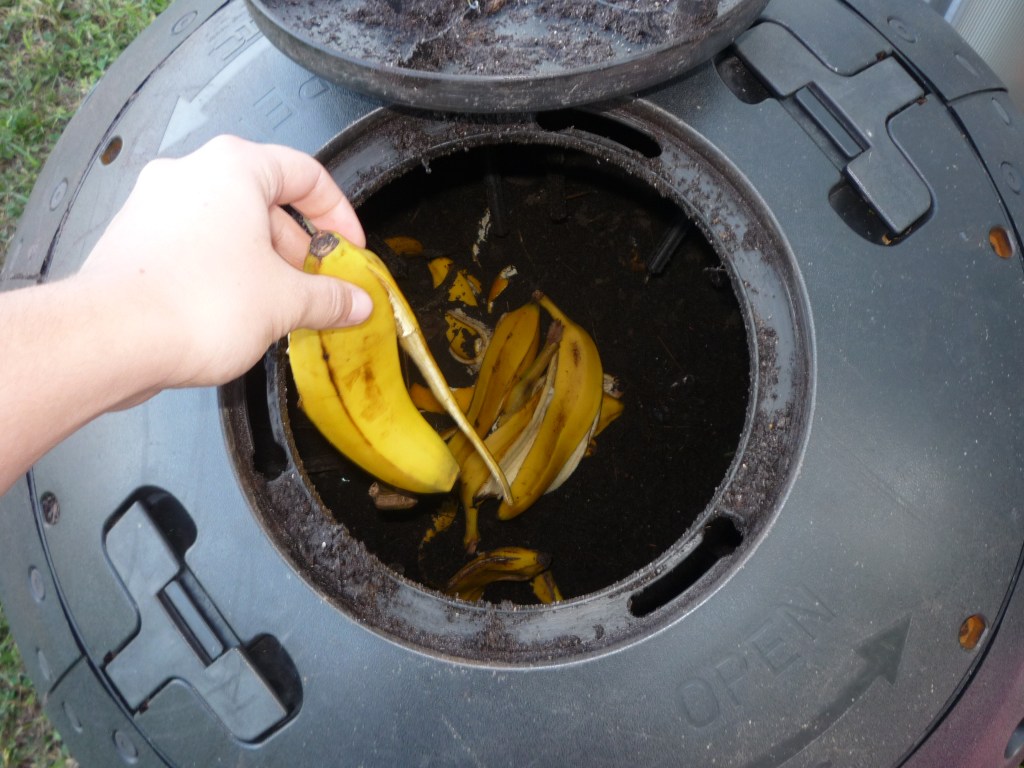
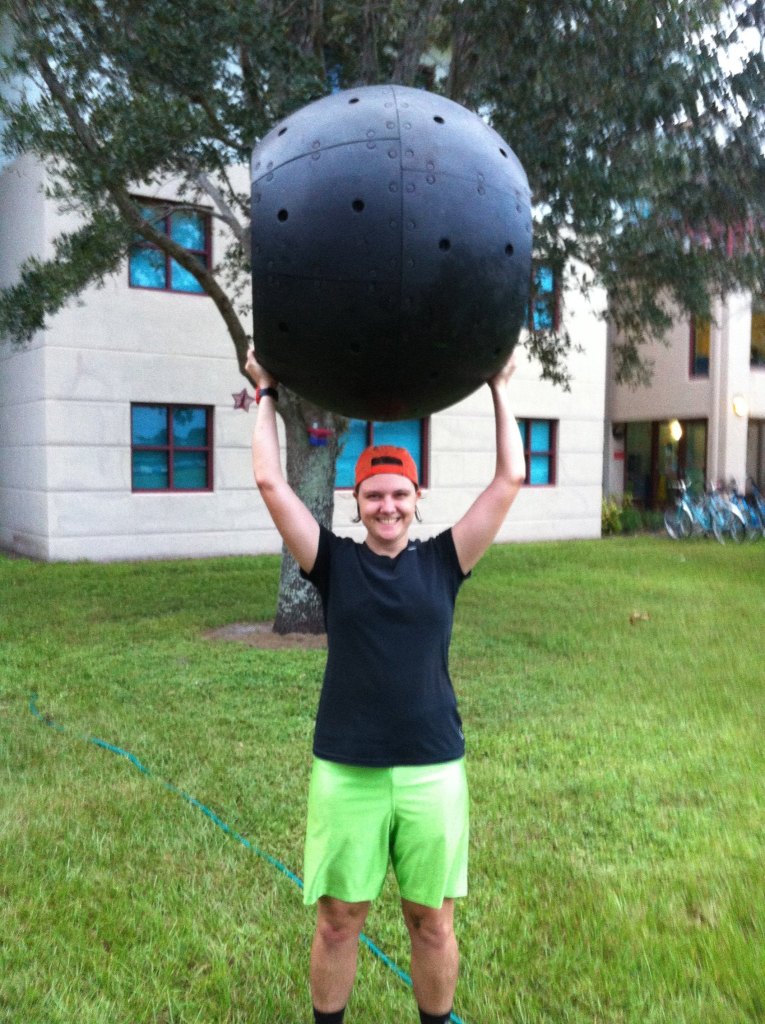
When I was in college, I fed my banana peels to two compost bins that lived next to our campus garden, which was my baby that I loved and tended daily (see if you can find the two bins in the photo on the home page of this blog). I had a mental mind shift in which I no longer saw my food waste as trash, but instead as something that belonged in the compost bin that would eventually become soil that would nourish my vegetables. After I graduated, I spent a year traveling in AmeriCorps NCCC and I lived in seven states over the course of eleven months. Now that I am not moving every month or two, and with what I now know from the documentary about the importance of composting to the reduction of emissions, I’m planning to start composting again. What container I will use and where I will do it is yet to be determined, but I have started to hold on to my food waste.

Feeding the compost ball.
Holding up the compost ball after emptying it.

In addition to composting, another one of my goals that I planned to implement when I started my four months was to track how much meat I eat. A few names that I have called myself to describe my diet over the past few years include pollo-pescatarian and part-time vegetarian. I do not eat beef or pork, but I eat chicken and seafood. I decided that I didn’t want to eat beef relatively early, maybe in eighth or ninth grade, because I did not enjoy the taste and I did not want to continue consuming an animal that I did not have any reason to eat. I am proud to say that I have never eaten a Big Mac or a Whopper. In college, I learned about the high environmental costs of beef, which only added to my list of reasons not to eat it. I also gave up pork after learning about how smart pigs are and how their tails are docked, or partly chopped off, so that they don’t let other pigs bite their tails. I read books like The Omnivore’s Dilemma by Michael Pollen and I watched some documentaries on animal agriculture and factory farming, so I accepted the moral costs of continuing to eat some types of meat by being educated on what my food had to go through to get to me. I ate all of my meals at the campus dining hall in college, and I did my best to eat at least two of my three meals every day without meat, which is how I came to call myself a part-time vegetarian.

Right now, I continue to eat chicken and fish because I enjoy their taste and they have lower environmental impacts than other types of meat. I also eat cheese, but I recently decided to stop deliberately drinking milk or eating eggs unless they are part of a recipe. For the past month, or the duration of time that I have been in quarantine, almost all of my breakfasts and lunches have been vegetarian, and many of my dinners have involved chicken or fish, so about 66% of my diet is currently vegetarian. Now that I will be keeping track of my meatless days, I expect them to increase. I’ll probably be eating more chickpeas and soybeans, which were staples of my diet when I was in college. Eat less meat and compost your food waste and may thee use naught new.

This was my theme song this past week, as I found the lyrics relatable in the context of quarantine. The music video is also aesthetically pleasing.
Create your own website, free on WordPress.com.Create your own website.
Start free