It is day 100 of my challenge and it has now been a month since my last work shift, and I am currently on furlough. I have just over three weeks left of my four months of nothing new, so we’ll see how many of my goals I can implement.
Goals that I implemented:
- Tool 1 Stop Shopping goal: no new things except food and gas/try to buy local if new
- Update: Naught added to the fund.
- Tool 2 Grow Some Food goal: plant beans in a pot
- Update: Beany babies will have another batch of beans in a bit.
- Tool 3 Eat Local goal: start tracking meatless days
- Update: I did not eat any meat yesterday or today and I will try to be a full vegetarian a couple of days per week and keep track. I have identified as a part-time vegetarian for a few years, which I will explain below.
- Tool 4 Buy Local goal: buy from local restaurants and no chains/fast food
- Update: Naught added to the fund.
- Tool 5 Turn Off The Lights goal: no phone until after breakfast and computer off by 9:30pm
- Update: My sleep schedule has been pushed way back to falling asleep at 1 or 2am most nights even if I try to go to sleep earlier, so I’m not going to fine myself for staying on the computer later. I continue to be away from my phone when I eat meals.
- Tool 6 Consume Less Plastic goal: $5 fine for any disposable plastic utensils/straws/plates/cups
- Update: Naught added to the fund.
- Tool 10 Track Your Trash goal: research and purchase reusable cloth feminine products
- Update: I ordered and received two more pads from Etsy. Technically they are new items even if they are an investment, so I’ll go ahead and add $30 to the fund for all of them.
- Tool 10 Track Your Trash goals: look into composting
- Update: I’m just starting on this goal and I will also discuss this below.
- Tool 11 Guzzle Less Gas goal: begin tracking gas/train/bike usage
- Update: I only drove once to get groceries, and I bike to a local park almost every day.
- Continued tracking time.
- Update: I spent quite a bit of time this week watching shows, including live-streamed concerts, webinars, documentaries, and musicals. I am also slowly getting through my to-do list.
Goals that I still need to implement:
- Tool 3 Eat Local goals: look into IDEAS for Us farmers market
- Tool 6 Consume Less Plastic goal: only buy products with recyclable packaging for a period of time
- Tool 10 Track Your Trash goals: look into visiting a landfill, do the waste/water audit I created in college and carry trash
- Tool 11 Guzzle Less Gas goals: calculate my carbon footprint, ultimately donate to offset fund at the end of the four months, conduct cost-benefit analysis of trading in my RAV4 for a hybrid or electric car
- Additional goals: find and apply to summer and post-summer jobs, work on my college thesis for publishing
- Nothing New Fund for the past week: $30; Current total: $194
Of the many things that I watched this past week, two of them were a Fridays For Future webinar and a documentary called The Need to Grow. Both were about food production and how it relates to climate change. My key takeaway from the webinar was that the two things that everyone can do to most reduce their carbon footprint are to stop flying and to shift to a plant-based diet. I had multiple takeaways from The Need to Grow. I like statistics because numbers reveal truth in a way that words do not. I made a list of them from the documentary, and I’ll share just a few. In the United States, more than one third of fossil fuels, half of all water, and 80% of farm land are used by animal agriculture. At the same time, 32 million tons of food are thrown out every year in the United States, and over 97% of our food waste ends up in landfills. We lose soil at ten times the rate at which it can be naturally replenished, and we have an estimated 60 years of farmable soil left.
The documentary shifted my way of thinking from trees as the way to sequester carbon to soil as a major solution for climate change. Stopping deforestation is very important for maintaining our existing carbon sinks, but looking to the future, protecting soil may be more important for not only mitigating climate change, but for creating a food system that is able to sustain humanity. According to the documentary, healthy soil is alive with microbes that evolved to provide plants with the healthiest growing conditions, and it is in combination with the growth of plants that carbon can be sequestered in healthy soil. Our current method of factory farming, which involves applying large amounts of pesticides and fertilizers to a monoculture, is killing the soil in the attempt to circumvent natural processes, as if that is a good idea. Regenerative agriculture, which attempts to replicate what happens in nature, provides a sustainable alternative to factory farming that makes people healthier, gives them local food security, and helps mitigate climate change. What’s not to love?
To avoid contributing to methane emissions by sending food waste to the landfill, composting can return the carbon from organic materials to the Earth and help produce healthy soil. It gives a whole new meaning to the climate strike chant, “No more coal, no more oil, keep our carbon in the soil.” We need to keep prehistoric carbon found in fossils fuels in the ground, but we also need to keep present-day carbon out of our atmosphere by securing it in our soil.
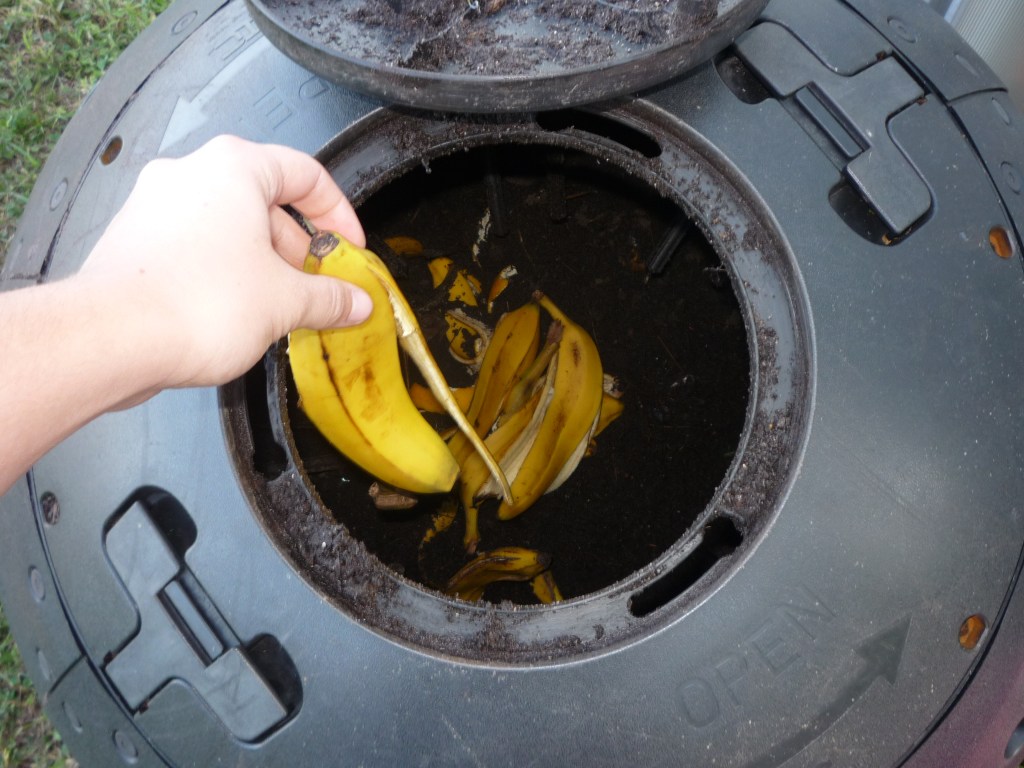
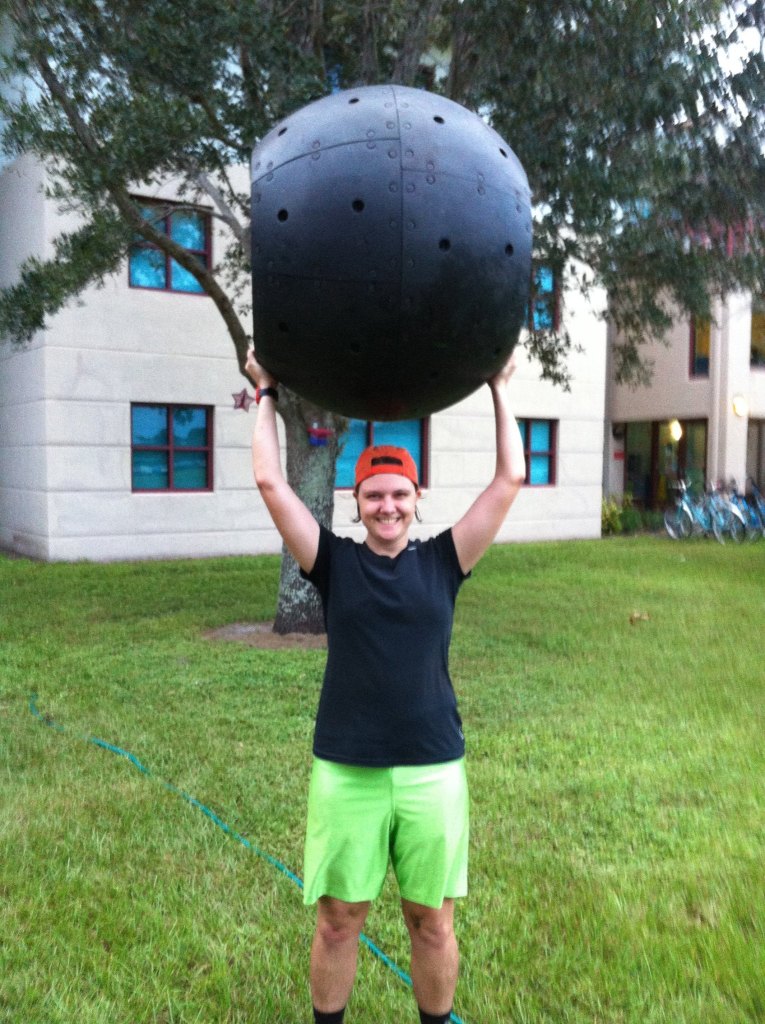
When I was in college, I fed my banana peels to two compost bins that lived next to our campus garden, which was my baby that I loved and tended daily (see if you can find the two bins in the photo on the home page of this blog). I had a mental mind shift in which I no longer saw my food waste as trash, but instead as something that belonged in the compost bin that would eventually become soil that would nourish my vegetables. After I graduated, I spent a year traveling in AmeriCorps NCCC and I lived in seven states over the course of eleven months. Now that I am not moving every month or two, and with what I now know from the documentary about the importance of composting to the reduction of emissions, I’m planning to start composting again. What container I will use and where I will do it is yet to be determined, but I have started to hold on to my food waste.
In addition to composting, another one of my goals that I planned to implement when I started my four months was to track how much meat I eat. A few names that I have called myself to describe my diet over the past few years include pollo-pescatarian and part-time vegetarian. I do not eat beef or pork, but I eat chicken and seafood. I decided that I didn’t want to eat beef relatively early, maybe in eighth or ninth grade, because I did not enjoy the taste and I did not want to continue consuming an animal that I did not have any reason to eat. I am proud to say that I have never eaten a Big Mac or a Whopper. In college, I learned about the high environmental costs of beef, which only added to my list of reasons not to eat it. I also gave up pork after learning about how smart pigs are and how their tails are docked, or partly chopped off, so that they don’t let other pigs bite their tails. I read books like The Omnivore’s Dilemma by Michael Pollen and I watched some documentaries on animal agriculture and factory farming, so I accepted the moral costs of continuing to eat some types of meat by being educated on what my food had to go through to get to me. I ate all of my meals at the campus dining hall in college, and I did my best to eat at least two of my three meals every day without meat, which is how I came to call myself a part-time vegetarian.
Right now, I continue to eat chicken and fish because I enjoy their taste and they have lower environmental impacts than other types of meat. I also eat cheese, but I recently decided to stop deliberately drinking milk or eating eggs unless they are part of a recipe. For the past month, or the duration of time that I have been in quarantine, almost all of my breakfasts and lunches have been vegetarian, and many of my dinners have involved chicken or fish, so about 66% of my diet is currently vegetarian. Now that I will be keeping track of my meatless days, I expect them to increase. I’ll probably be eating more chickpeas and soybeans, which were staples of my diet when I was in college. Eat less meat and compost your food waste and may thee use naught new.
 Naught New